Nov 18, 2025
Emotional Dynamics Explained: Insights for Personal Growth
AI emotional coach reveals emotional dynamics, types, live emotion detection, and relationship management. A comprehensive guide to self-improvement.

Emotional Dynamics Explained: Insights for Personal Growth
More than 80 percent of people experience emotional ups and downs that shape how they react to daily life and relationships. Yet these shifts are far more than random mood changes. They reveal patterns that influence well-being, resilience, and even relationship satisfaction. By exploring the core ideas behind emotional dynamics, you can gain a clearer view of what drives your responses, uncover practical strategies for self-understanding, and discover how emotional intelligence is more dynamic and powerful than most realize.
Table of Contents
Defining Emotional Dynamics And Core Concepts
Types Of Emotional Dynamics In Relationships
Key Drivers And Patterns Of Emotional Responses
Ai-Powered Detection And Guidance In Real Time
Common Challenges And Improving Emotional Intelligence
Key Takeaways
Point | Details |
Understanding Emotional Dynamics | Recognizing emotional dynamics as fluid processes enhances self-awareness and personal growth by highlighting emotional variability, inertia, and responsiveness. |
Impact on Relationships | Emotional dynamics significantly shape relationship quality through synchronization and transmission, informing how partners connect and respond emotionally. |
Harnessing AI for Emotional Insight | AI technologies provide real-time emotional detection and guidance, facilitating better communication and emotional intelligence development. |
Developing Emotional Intelligence | Overcoming challenges in emotional intelligence requires self-reflection, mindfulness, and empathy to enhance personal relationships and psychological health. |
Defining Emotional Dynamics and Core Concepts
Emotional dynamics represent the intricate patterns and complex interactions of our emotions over time. Unlike static emotional states, these dynamics capture how feelings shift, fluctuate, and transform through different contexts and experiences. According to research from PubMed, emotional dynamics involve nuanced elements like emotional variability, emotional instability, and emotional inertia - each revealing critical insights into psychological well-being.
Research highlights that emotional dynamics are not just abstract concepts, but powerful indicators of our interpersonal relationships and mental health. A compelling study investigating moment-to-moment emotional changes reveals that individual differences in emotional patterns significantly impact how we respond to others and experience relationship satisfaction. These dynamics act like an internal emotional navigation system, helping us understand our psychological landscape and adaptive responses.

Key components of emotional dynamics include:
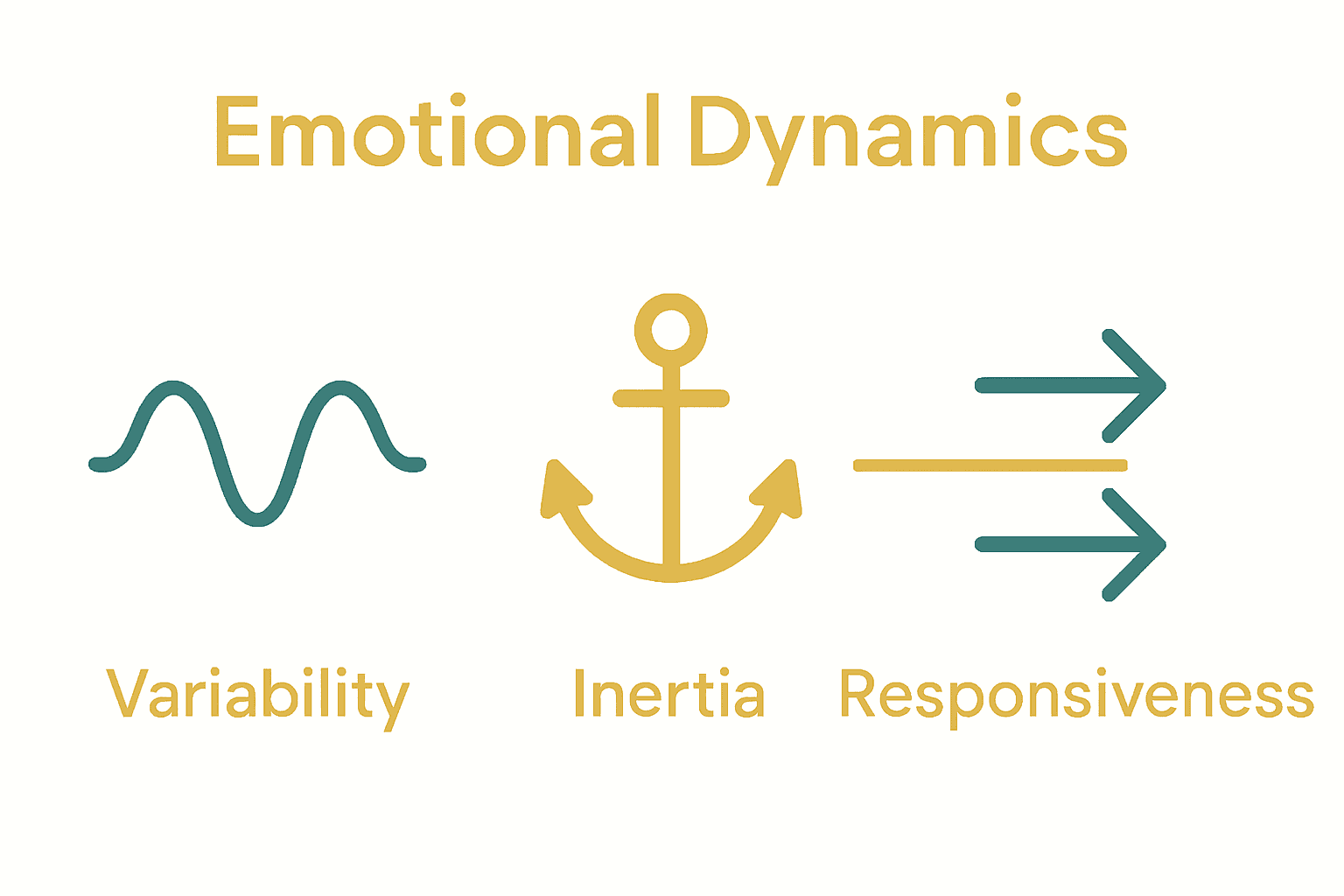
Emotional Variability: The range and frequency of emotional shifts
Emotional Inertia: How quickly or slowly emotions change
Emotional Responsiveness: Our ability to adapt and react to different emotional stimuli
Emotional Resilience: Capacity to recover and regulate emotions after challenging experiences
Understanding these core concepts can transform how we perceive and manage our emotional experiences.
By recognizing emotional dynamics as fluid, complex processes rather than fixed states, we open ourselves to more nuanced self-awareness and personal growth. As PubMed research suggests, developing emotional intelligence means learning to navigate these dynamic emotional landscapes with greater skill and insight. For a deeper exploration of emotional intelligence principles, check out our comprehensive guide on emotional intelligence.
Types of Emotional Dynamics in Relationships
Emotional dynamics within relationships represent complex, interconnected patterns of emotional exchange between partners. Arizona State University research reveals that these dynamics are far more intricate than simple emotional interactions, involving sophisticated processes of emotional coregulation and emotional transmission that shape relationship experiences.
Researchers have identified several distinct types of emotional dynamics that significantly impact relationship quality and individual well-being. Emotional Synchronization occurs when partners naturally align their emotional states, creating a sense of deep connection and mutual understanding. Emotional Contagion represents another fascinating dynamic where emotions seamlessly transfer between partners, influencing their shared psychological experiences. Conversely, Emotional Divergence emerges when partners experience contrasting emotional states, which can create tension or provide opportunities for deeper empathy and understanding.
Key types of relationship emotional dynamics include:
Emotional Synchronization: Mutual emotional alignment
Emotional Transmission: Emotion transfer between partners
Emotional Reactivity: Immediate emotional responses to partner’s states
Emotional Regulation: Ability to manage shared emotional experiences
Emotional Buffering: Protecting each other from negative emotional states
According to PubMed research, these emotional dynamics can predict relationship outcomes and shared behaviors. Understanding these patterns allows couples to develop more intentional, supportive emotional interactions. For more insights into transforming relationship dynamics, explore our guide on emotional awareness for relationships.
Key Drivers and Patterns of Emotional Responses
Emotional responses are complex psychological phenomena driven by intricate neurological and environmental factors. PubMed research reveals that emotional patterns can be profoundly influenced by significant life events, such as romantic breakups, which trigger nuanced emotional landscapes of love, anger, and sadness. These emotional responses are not random but follow sophisticated psychological mechanisms that help humans process and adapt to changing circumstances.
The brain plays a crucial role in shaping our emotional responses. ArXiv research highlights how functional brain networks demonstrate remarkable complexity during emotional processing, revealing patterns of network stability and network instability that fundamentally drive our emotional experiences. These neural networks act like intricate emotional navigation systems, processing stimuli and generating appropriate emotional responses based on past experiences, current context, and anticipated outcomes.
Key drivers of emotional responses include:
Neurological Triggers: Brain network activation patterns
Psychological Context: Personal history and learned emotional scripts
Physiological State: Hormonal and biochemical influences
Environmental Stimuli: External events and social interactions
Cognitive Interpretation: Individual meaning-making processes
Understanding these drivers empowers individuals to develop more intentional emotional responses.
By recognizing the complex mechanisms underlying our emotions, we can cultivate greater emotional intelligence and resilience. For deeper insights into developing emotional awareness, explore our guide to boosting emotional intelligence naturally.
AI-Powered Detection and Guidance in Real Time
Artificial Intelligence is revolutionizing how we understand and navigate emotional experiences, offering unprecedented insights into human emotional dynamics. ArXiv research highlights groundbreaking developments in systems capable of automatically recognizing emotions during interactions, transforming our approach to emotional support and understanding. These advanced AI technologies can detect subtle emotional nuances that often escape human perception, providing real-time analysis of complex emotional landscapes.
The sophistication of AI emotional detection goes beyond simple recognition. Recent research introduces comprehensive evaluation frameworks for emotional support, demonstrating AI’s ability to track emotional dynamic trajectories with remarkable precision. These systems analyze multiple layers of communication, including verbal cues, tone, context, and implicit emotional signals, creating a multidimensional understanding of human emotional experiences that adapts in real time.
Key capabilities of AI-powered emotional detection include:
Instant Emotional Mapping: Identifying emotional states within milliseconds
Context-Aware Analysis: Understanding emotions within specific interaction contexts
Predictive Emotional Modeling: Anticipating potential emotional shifts
Personalized Guidance: Generating tailored emotional support strategies
Continuous Learning: Improving emotional detection accuracy through interactions
AI technologies are transforming emotional intelligence from a static concept to a dynamic, responsive experience. By providing nuanced, real-time insights, these systems help individuals develop deeper self-awareness and more effective communication strategies. For those interested in leveraging AI for emotional growth, check out our guide to mastering emotional self-improvement with AI guidance.
Common Challenges and Improving Emotional Intelligence
Emotional intelligence is a complex skill that many individuals struggle to develop, presenting numerous challenges in personal and professional relationships. PubMed research reveals that patterns of short-term emotional changes significantly impact psychological well-being, highlighting the intricate nature of emotional management. People often face difficulties in recognizing, understanding, and effectively regulating their emotional responses, which can lead to communication breakdowns and interpersonal conflicts.
Research demonstrates that individual differences play a crucial role in emotional intelligence development. Scientific studies show how unique emotional dynamics directly influence interpersonal responsiveness and relationship satisfaction. The most common challenges include emotional reactivity, limited self-awareness, and difficulty in emotional regulation. These obstacles can create significant barriers to building meaningful connections and understanding one’s inner emotional landscape.
Key strategies for improving emotional intelligence include:
Self-Reflection: Developing deeper awareness of emotional patterns
Mindfulness Practice: Cultivating present-moment emotional awareness
Emotional Mapping: Identifying triggers and response mechanisms
Communication Skills: Learning to express emotions effectively
Empathy Development: Improving understanding of others’ emotional experiences
Transforming emotional intelligence is a journey of continuous learning and self-discovery. While challenges are inevitable, developing these skills can dramatically improve personal relationships, professional interactions, and overall psychological well-being. For those seeking a comprehensive understanding of emotional intelligence, our complete breakdown of emotional intelligence offers deeper insights into this transformative process.
Master Your Emotional Dynamics with AI-Powered Support
Understanding the complex emotional dynamics that shape your relationships and personal growth is a crucial first step. This article highlights challenges like emotional variability, emotional responsiveness, and regulation difficulties that can hold you back from deeper self-awareness and connection. If you want to move beyond simply recognizing your feelings to truly mastering how emotions shift and influence your daily interactions, advanced support can make all the difference.
Wisdom App offers a unique solution as the world’s first AI-powered emotional and relationship coach right inside WhatsApp. It tracks your real-time emotional dynamics, such as emotional synchronization and reactivity, to deliver personalized guidance tailored to your unique situations. With features like live emotion detection, relationship superintelligence, and data-driven insights, Wisdom helps you build emotional intelligence naturally and improve your communication with loved ones or colleagues. Start your journey today by signing in to Wisdom App and explore how this AI emotional coach can elevate your self-awareness and relationships now. For a deeper dive, discover our guide on emotional intelligence to support your growth every step of the way.
Frequently Asked Questions
What are emotional dynamics?
Emotional dynamics refer to the complex patterns and interactions of our emotions over time, encompassing how feelings shift and transform across different contexts and experiences.
How do emotional dynamics affect relationships?
Emotional dynamics significantly influence relationships through processes like emotional synchronization, emotional contagion, and emotional reactivity, ultimately impacting relationship quality and individual well-being.
What are the key components of emotional intelligence?
The key components of emotional intelligence include self-awareness, emotional regulation, empathy, social skills, and motivation, all of which help individuals navigate their emotional experiences effectively.
How can I improve my emotional intelligence?
Improving emotional intelligence can be achieved through self-reflection, mindfulness practice, emotional mapping, enhancing communication skills, and developing empathy to better understand both your emotions and those of others.
Recommended