Dec 3, 2025
Master the Parental Self-Awareness Process for Growth
Discover the parental self-awareness process step-by-step to enhance personal growth, emotional intelligence, and stronger family connections through practical actions.

Master the Parental Self-Awareness Process for Growth
More than 60 percent of american parents report feeling overwhelmed when trying to manage their emotions during stressful moments with their children. This challenge affects daily family life and sets the tone for how kids learn to handle their own feelings. By becoming self aware and developing mindful communication, parents can create stronger connections and model emotional intelligence that lasts a lifetime. Discover simple steps that bring real change to your parenting journey and build a foundation for emotional growth.
Table of Contents
Step 1: Set Clear Intentions for Self-Awareness
Step 2: Identify Emotional Triggers in Parenting
Step 3: Reflect on Personal Patterns and Beliefs
Step 4: Apply Mindful Communication with Children
Step 5: Evaluate Progress and Adjust Approaches
Quick Summary
Key Insight | Explanation |
|---|---|
1. Set Clear Intentions for Awareness | Understand your emotional landscape to respond thoughtfully to parenting challenges. |
2. Identify Emotional Triggers | Document specific situations that provoke strong reactions to better manage responses. |
3. Reflect on Personal Patterns | Explore the beliefs behind emotional reactions to enhance emotional intelligence. |
4. Apply Mindful Communication | Use active listening and empathy to improve connections with your children. |
5. Evaluate Progress Regularly | Keep a monthly journal to track emotional interactions and adjust communication strategies accordingly. |
Step 1: Set Clear Intentions for Self-Awareness
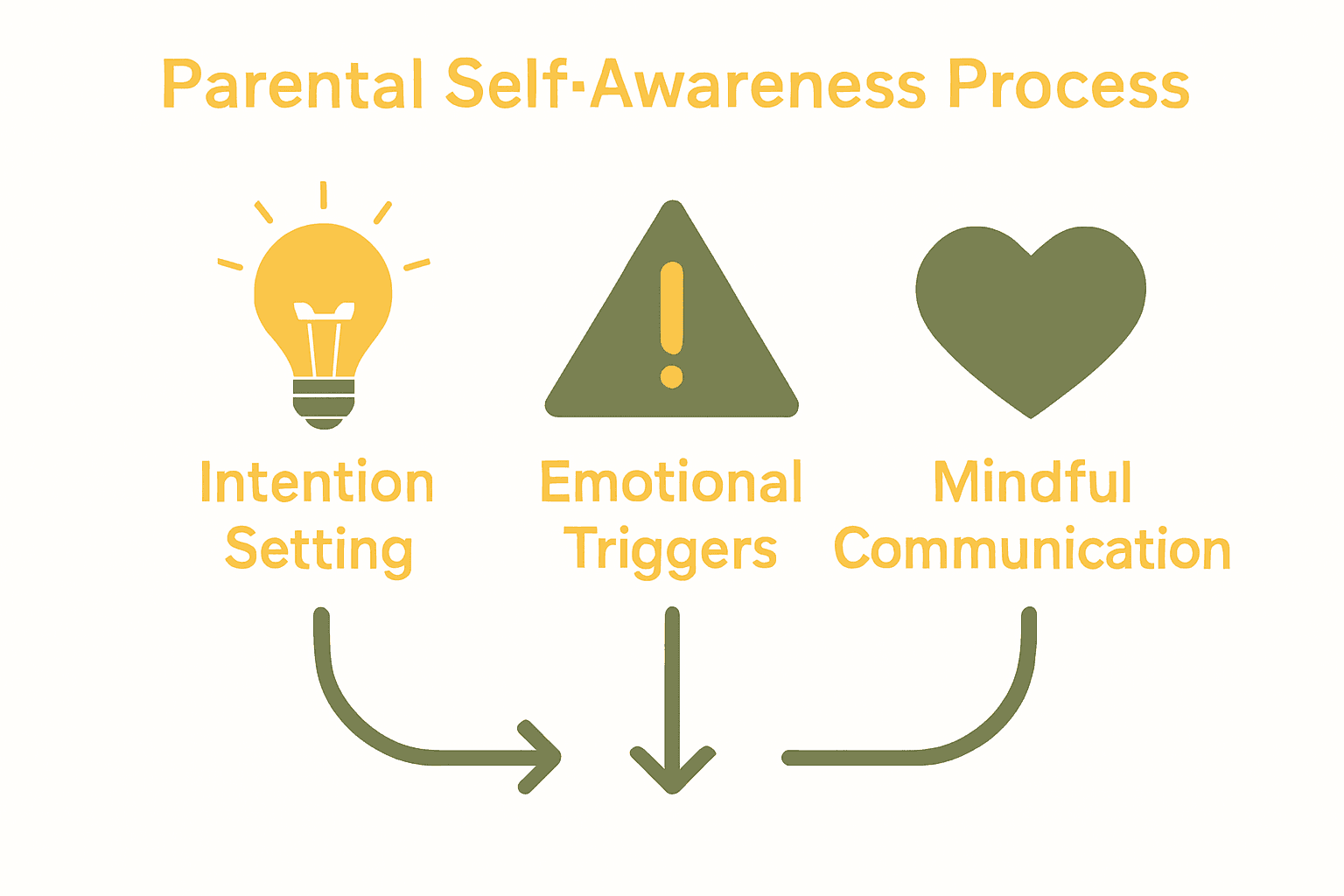
Setting clear intentions is the foundational first step in developing powerful parental self-awareness. This process involves understanding your emotional landscape and consciously preparing yourself to respond thoughtfully rather than react impulsively.
According to KQED, parents need to recognize their emotional triggers and model healthy emotional responses for their children. Start by creating a personal awareness map that identifies your typical emotional reactions. Ask yourself key questions: What situations typically cause me stress? When do I feel overwhelmed? What emotional patterns do I consistently repeat?
To begin this process, schedule 15 minutes of quiet reflection time where you can honestly assess your emotional patterns without judgment. Write down three specific emotional triggers you notice in your parenting journey. These might include moments of frustration during tantrums, feeling overwhelmed by multiple child demands, or experiencing anxiety during challenging parenting scenarios. By naming these triggers, you transform them from unconscious reactions into conscious choices.
A powerful technique is practicing emotional pause before responding. When you feel your emotions rising, take a deliberate breath. This momentary pause allows you to shift from reactive mode to responsive mode, giving you space to choose a more thoughtful interaction with your child. Remember that self-awareness is not about perfection but about consistent, incremental growth in understanding yourself and your emotional landscape.
As you develop this skill, you will gradually build emotional resilience that not only supports your personal growth but also provides a powerful model of emotional intelligence for your children. 7 Essential Tips for Self-Awareness and Growth can offer additional strategies to deepen this practice.
Step 2: Identify Emotional Triggers in Parenting
Identifying your emotional triggers is a critical step in developing parental self awareness. This process helps you understand the specific situations that provoke intense emotional responses, allowing you to respond more intentionally and thoughtfully.
According to Cleveland Clinic Health, parents can recognize their emotional triggers by carefully examining situations that consistently generate strong emotional reactions. As Momentous Institute explains, understanding triggers involves mapping out specific scenarios that consistently push your emotional buttons.
Start by creating a detailed emotional trigger journal. Over the course of one week, document every moment where you feel your emotions intensely escalating. Note the specific circumstances the time of day, who was involved, and what specific actions or words sparked your reaction. Look for patterns such as feeling overwhelmed during morning routines, experiencing frustration during homework time, or feeling irritated when children are not listening.
A practical technique is to pause and ask yourself probing questions when you notice an emotional surge. What underlying feeling is driving this reaction? Is this truly about the current situation or am I carrying unresolved stress from earlier experiences? By developing this level of self reflection, you transform reactive patterns into opportunities for personal growth.
Remember that identifying triggers is not about self criticism but about developing emotional intelligence. Emotional Intelligence Guide for Parents can provide additional strategies for understanding and managing your emotional landscape. Your goal is to build awareness that allows you to respond to challenging parenting moments with patience and understanding.

Step 3: Reflect on Personal Patterns and Beliefs
Reflecting on personal patterns and beliefs is a transformative process that allows parents to understand the deeper roots of their emotional responses. This step involves diving beneath surface reactions to explore the underlying beliefs that shape your parenting approach.
According to PsychAlive, the key to managing emotional triggers is to practice the ‘name it to tame it’ technique. Research from the National Institutes of Health highlights that parents who deeply understand their emotional patterns can more effectively manage their reactions to their children’s behaviors.
Begin by creating a comprehensive reflection journal that goes beyond surface observations. Divide your journal into three critical sections: observed behaviors, underlying emotions, and potential root beliefs. For each emotional trigger you identified earlier, write down the specific behavior that sparked your reaction, the immediate emotional response you experienced, and then dig deeper to uncover the core belief driving that response.
Consider asking yourself probing questions like: What childhood experiences might be influencing my current reaction? Am I repeating patterns I learned from my own parents? What unresolved fears or insecurities might be surfacing in this moment? This level of introspection transforms reactive parenting into a conscious, compassionate practice.
The goal is not to judge yourself but to develop a compassionate understanding of your emotional landscape. Personal Growth Coaching Steps for Real Transformation can provide additional insights into breaking ingrained patterns. By recognizing and understanding your personal beliefs, you create space for more intentional and loving parenting responses.
Step 4: Apply Mindful Communication with Children
Mindful communication transforms parenting from reactive interactions to intentional connections. This critical step involves creating a compassionate communication framework that helps children feel heard understood and emotionally supported.
According to Casa Mental Health, effective mindful communication requires integrating whole brain strategies that validate children’s emotional experiences. The Biblical Parenting approach emphasizes creating a calm communication space where children can safely express their feelings.
Implement a three step communication approach. First listen without interruption allowing your child to fully express their thoughts and emotions. Use body language that demonstrates active engagement maintain eye contact and provide subtle nonverbal cues that communicate your full attention. Second reflect back what you heard using phrases like I hear you saying or It sounds like you are feeling to confirm you understand their perspective accurately.
The third and most crucial step involves responding with empathy instead of judgment. When your child shares an emotional experience validate their feelings by acknowledging the emotion without attempting to immediately fix or minimize their experience. Phrases such as That must be difficult or I can see why you would feel that way create emotional safety and demonstrate that you are truly listening.
Understanding Emotional Awareness for Families can provide additional insights into developing deeper family communication. Remember that mindful communication is a skill that improves with consistent practice patience and genuine presence.
Step 5: Evaluate Progress and Adjust Approaches
Evaluating progress in your parental self awareness journey requires consistent reflection and strategic adjustment. This final step transforms your insights into meaningful personal growth by creating a dynamic framework for continuous improvement.
Research from eScholarship emphasizes the critical importance of identifying emotional characteristics and learning patterns associated with specific experiences. This approach allows parents to recognize emotional triggers and develop more intentional responses.
Create a monthly self reflection journal with three core sections. First track specific emotional interactions with your children documenting both successful moments of mindful communication and instances where you struggled to maintain emotional regulation. Record the context emotional intensity your initial reaction and how you ultimately responded. Second analyze these entries looking for recurring patterns identifying your most common triggers and assessing the effectiveness of your current communication strategies.
The third component involves setting measurable growth objectives based on your observations. Choose 1 to 2 specific communication skills to improve each month. These might include speaking more softly during tense moments practicing active listening techniques or reducing defensive responses. Quantify your progress by tracking frequency of trigger moments and your ability to respond thoughtfully rather than reactively.
Emotional Awareness Guide for Transforming Relationships can provide additional strategies for ongoing personal development. Remember that growth is a continuous journey not a destination. Approach your self awareness practice with compassion curiosity and a commitment to incremental improvement.
Unlock Deeper Parental Self-Awareness with AI-Powered Support
Mastering parental self-awareness means identifying emotional triggers and practicing mindful communication as the article highlights. This process can feel overwhelming when facing frustration, anxiety, or repeating old patterns without clear guidance. What if you had a compassionate digital mentor to help you pause thoughtfully and respond with empathy every step of the way?

Experience Wisdom App, the world’s first AI emotional coach built directly into WhatsApp. Wisdom detects your emotional patterns in real time and offers personalized, strategic advice to transform reactive parenting into intentional connection. Join thousands who use this superintelligent AI agent for actionable insights in emotional awareness and relationship success. Start your growth journey now with personalized coaching steps designed to help you manage triggers, reflect deeply, and communicate mindfully with your children.
Take the next step toward calm, confident parenting. Sign up today at Wisdom App and watch your self-awareness grow alongside your family relationships.
Frequently Asked Questions
How can I identify my emotional triggers in parenting?
Identifying your emotional triggers involves creating a detailed emotional trigger journal. Spend one week documenting situations that provoke strong emotional reactions, noting the context, people involved, and specific actions or words that sparked your response.
What steps can I take to practice emotional pause before responding to my child?
To practice emotional pause, take a deliberate breath when you feel your emotions rising. This moment allows you to shift from being reactive to responsive, promoting a more thoughtful interaction with your child.
How do I reflect on my personal patterns and beliefs in parenting?
To reflect on your patterns and beliefs, create a comprehensive reflection journal. Divide it into three sections: observed behaviors, underlying emotions, and potential root beliefs, and analyze your emotional triggers and responses to uncover deeper insights.
What techniques can I use for mindful communication with my children?
Implement a three-step communication approach: listen without interruption, reflect back what you’ve heard, and respond empathetically. Make it a habit to acknowledge your child’s feelings to foster a safe emotional environment.
How can I evaluate my progress in developing parental self-awareness?
Create a monthly self-reflection journal where you document emotional interactions with your children. Analyze both successful moments and challenges to identify patterns and set measurable growth objectives for your communication skills each month.
What are some examples of growth objectives I can set for myself?
Choose 1 to 2 specific communication skills to improve each month, such as practicing active listening or speaking calmly during tense moments. Track your progress and aim to reduce reactive responses by a measurable percentage within 30 days.
Recommended