Nov 18, 2025
Why Emotional Analytics Matter: Complete Guide
Discover why emotional analytics matter, how AI coaches use them, key benefits for relationships, and practical risks in our comprehensive guide.

Why Emotional Analytics Matter: Complete Guide
Most tools can track what you do, but few can reveal how you actually feel. Emotional analytics is changing that by transforming raw emotions into measurable, actionable data. Experts now use neuroscience and AI to decode feelings as they happen, not just after the fact. This breakthrough helps us understand the invisible drivers behind choices and behaviors, promising deeper insights for personal growth, stronger relationships, and smarter technology.
Table of Contents
Defining Emotional Analytics And Core Concepts
Types Of Emotional Analytics And Technologies
How Emotional Analytics Power AI Coaches
Benefits For Relationships, Work, And Wellbeing
Risks, Privacy, And Ethical Considerations
Key Takeaways
Point | Details |
|---|---|
Emotional Analytics Defined | This field combines neuroscience, psychology, and data analysis to convert emotional experiences into measurable insights. |
Technological Innovation | Advanced systems like Affectiva’s Emotion AI and affective haptics provide tools for nuanced emotional interpretation and engagement. |
Empowerment in Coaching | Emotional analytics enable AI coaches to tailor support by understanding and predicting individual emotional responses effectively. |
Ethical Considerations | The rise of emotional analytics raises vital concerns about privacy, consent, and potential misuse that must be addressed through robust ethical frameworks. |
Defining Emotional Analytics and Core Concepts
Emotional analytics represents a sophisticated approach to understanding human emotional experiences through advanced technological and psychological frameworks. At its core, this emerging field combines insights from neuroscience, psychology, and data analysis to decode the complex landscape of human emotions. By leveraging cutting-edge technologies and scientific understanding, emotional analytics seeks to transform abstract emotional experiences into measurable, actionable insights.
According to the Theory of Constructed Emotion, emotions are not fixed states but dynamic constructions created by the brain in real-time. This groundbreaking perspective, developed by Lisa Feldman Barrett, suggests that emotions are contextual responses shaped by social, psychological, and neurological factors. Emotional analytics builds upon this framework, recognizing that emotions are intricate, adaptive processes rather than static, predetermined experiences.
Affective design represents another critical component of emotional analytics, focusing on creating systems that can proactively interact with and understand human emotional responses. This interdisciplinary approach integrates insights from computer science, psychology, and engineering to develop tools and technologies capable of interpreting emotional nuances.
The key components of emotional analytics include:
Sentiment Detection: Analyzing verbal and non-verbal emotional cues
Contextual Understanding: Interpreting emotions within specific social and personal contexts
Predictive Emotional Modeling: Using data to anticipate potential emotional trajectories
Real-time Emotional Mapping: Tracking emotional shifts and dynamics instantaneously
By combining technological sophistication with deep psychological insights, emotional analytics offers a revolutionary approach to understanding the intricate world of human emotions. It transforms abstract feelings into tangible, actionable intelligence, enabling more empathetic communication, personalized support, and profound self-awareness.
Types of Emotional Analytics and Technologies
Emotional analytics encompasses a diverse range of sophisticated technologies designed to decode and interpret human emotional experiences. These advanced systems leverage cutting-edge techniques from artificial intelligence, machine learning, and psychological research to provide unprecedented insights into emotional dynamics. By transforming complex emotional data into actionable intelligence, these technologies are revolutionizing how we understand and interact with human emotions.
Affectiva’s Emotion AI technology represents a groundbreaking approach to emotional analytics, utilizing deep learning and computer vision to detect nuanced emotional responses. This innovative system analyzes facial expressions, vocal intonations, and body posture, creating a comprehensive map of human emotional states. Facial recognition technologies can now decode micro-expressions, subtle changes in facial muscle movements that reveal underlying emotional experiences with remarkable precision.
Affective haptics introduces another fascinating dimension to emotional analytics, exploring how technology can influence and interpret emotional states through physical interaction. This interdisciplinary field demonstrates the potential for technologies to not just observe emotions, but actively engage with and potentially modulate emotional experiences. Applications range from therapeutic interventions for mental health conditions to enhanced user experiences in gaming and interactive technologies.
The primary types of emotional analytics technologies include:
Facial Expression Analysis: Detecting emotional states through visual cues
Voice Sentiment Analysis: Interpreting emotional tone through vocal characteristics
Physiological Response Tracking: Measuring emotional intensity through biometric data
Contextual Emotion Modeling: Analyzing emotional patterns within specific social contexts
Predictive Emotion AI: Forecasting potential emotional trajectories and responses
By integrating these sophisticated technologies, emotional analytics is transforming our understanding of human emotions from a subjective experience to a measurable, predictable phenomenon. These advanced systems offer unprecedented insights into the intricate world of human emotional experiences, bridging the gap between technological innovation and psychological understanding.

How Emotional Analytics Power AI Coaches
Emotional analytics has emerged as a transformative technology that empowers AI coaches to deliver unprecedented levels of personalized, empathetic support. By translating complex emotional data into actionable insights, these advanced systems can understand, predict, and respond to human emotional experiences with remarkable sophistication. AI coaches now leverage emotional analytics to create more nuanced, context-aware interactions that feel genuinely supportive and intuitive.
The HICEM model represents a groundbreaking advancement in artificial emotional intelligence, providing a comprehensive framework for categorizing and understanding human emotions. This innovative approach enables AI emotional coaching systems to move beyond simplistic emotional recognition, creating multi-dimensional emotional profiles that capture the intricate subtleties of human emotional experiences. By breaking down emotional states into granular, analyzable categories, AI coaches can develop more sophisticated, personalized engagement strategies.
EmoCo’s interactive visual analytics system demonstrates another critical dimension of emotional analytics in AI coaching. This technology can simultaneously analyze emotional coherence across multiple modalities, including facial expressions, vocal tones, and textual communication. Such comprehensive emotional mapping allows AI coaches to provide nuanced, multi-dimensional support that adapts in real-time to the user’s emotional landscape.
Key ways emotional analytics power AI coaches include:
Emotion Detection: Identifying subtle emotional states across multiple communication channels
Contextual Interpretation: Understanding emotions within specific personal and social contexts
Predictive Emotional Modeling: Anticipating potential emotional trajectories and intervention points
Personalized Response Generation: Crafting empathetic, tailored coaching strategies
Continuous Learning: Refining emotional understanding through ongoing interaction
By integrating these sophisticated emotional analytics capabilities, AI coaches are revolutionizing personal development and emotional support. They offer a level of insight, adaptability, and personalization that transcends traditional coaching methods, creating a new paradigm of technology-enabled emotional intelligence and personal growth.
Benefits for Relationships, Work, and Wellbeing
Emotional analytics has emerged as a powerful tool for transforming human experiences across multiple domains, offering unprecedented insights into our emotional landscapes. By providing deep, nuanced understanding of emotional dynamics, these advanced technologies can dramatically improve personal and professional interactions, communication effectiveness, and overall emotional intelligence. The potential for positive transformation extends far beyond simple data collection, touching nearly every aspect of human connection and personal growth.
Sentiment analysis integrated with learning analytics demonstrates remarkable potential for understanding emotional and cognitive states. In educational contexts, this approach reveals how emotional intelligence can be systematically developed, offering personalized insights that enhance learning outcomes and individual potential. By mapping emotional trajectories, individuals and organizations can create more supportive, adaptive environments that respond dynamically to emotional needs.
Emotional AI technologies in education highlight the broader implications of emotional analytics across various life domains. These technologies go beyond traditional assessment methods, providing sophisticated tools for understanding motivation, well-being, and personal growth. By recognizing the intricate connections between emotional states and performance, emotional analytics enables more holistic approaches to personal and professional development.
Key benefits of emotional analytics include:
Relationship Enhancement: Improving communication and empathy
Professional Performance: Optimizing workplace interactions and team dynamics
Personal Growth: Developing deeper self-awareness and emotional intelligence
Conflict Resolution: Providing strategies for more effective emotional management
Stress Reduction: Identifying and addressing emotional triggers proactively
By embracing emotional analytics, individuals and organizations can unlock more compassionate, intelligent approaches to human interaction.
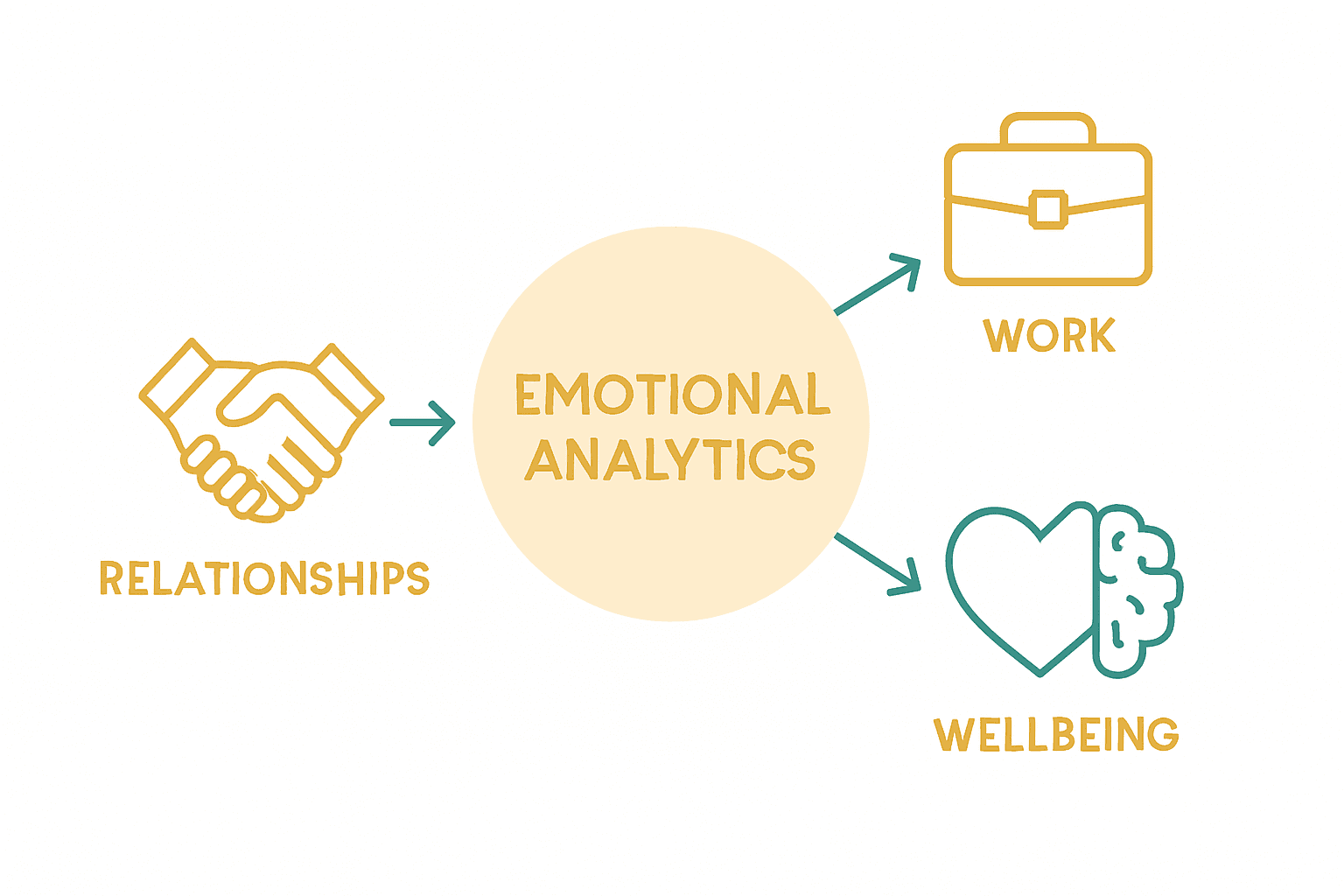
These technologies offer a revolutionary pathway to understanding ourselves and others, transforming how we navigate complex emotional landscapes in relationships, work, and personal development.
Risks, Privacy, and Ethical Considerations
Emotional analytics technologies represent a powerful double-edged sword, offering unprecedented insights into human emotional experiences while simultaneously raising critical questions about privacy, consent, and potential misuse. As these technologies become increasingly sophisticated, the ethical implications demand careful, nuanced examination to ensure they serve human well-being rather than compromise individual autonomy and emotional privacy.
AI-based emotion recognition presents significant ethical challenges that extend far beyond technological capabilities. Emotional data privacy emerges as a paramount concern, with potential risks including emotional manipulation, invasive tracking, and the potential for systematic bias in data interpretation. The research highlights the critical need for robust ethical frameworks that protect individuals from unintended emotional surveillance and potential psychological exploitation.
Affective computing’s advancement underscores the complex landscape of emotional technology ethics. As these systems become more nuanced in detecting and interpreting emotional states, the potential for misuse grows exponentially. Key ethical considerations include ensuring informed consent, maintaining strict data protection protocols, and developing transparent mechanisms that allow individuals to understand and control how their emotional data is collected, processed, and utilized.
Critical ethical considerations in emotional analytics include:
Consent and Transparency: Ensuring users fully understand data collection processes
Data Protection: Implementing robust security measures to prevent unauthorized access
Bias Mitigation: Identifying and eliminating potential algorithmic prejudices
Emotional Autonomy: Protecting individuals from manipulative technologies
Psychological Safety: Preventing potential emotional harm or exploitation
Navigating the ethical landscape of emotional analytics requires a holistic approach that balances technological innovation with fundamental human rights. By establishing clear ethical guidelines, maintaining rigorous privacy standards, and prioritizing individual agency, we can harness the transformative potential of these technologies while safeguarding the most intimate aspects of human emotional experience.
Unlock the True Power of Emotional Analytics in Your Relationships and Growth
Emotional analytics reveals how understanding feelings in real time can transform your relationships and personal development. If you want to move beyond just recognizing emotions and step into a world where AI offers strategic, personalized guidance, then Wisdom App is the perfect solution. It addresses key challenges from the article such as live emotion detection, contextual understanding, and predictive emotional modeling — all within the comfort of your WhatsApp chats.

Experience the world’s first AI emotional coach that acts as a wise and compassionate companion. With features like Relationship Superintelligence and data-driven communication insights, Wisdom helps you grow smarter in love, work, family, and friendships. Don’t wait to transform your emotional awareness into actionable success. Start now by joining Wisdom App and harness the power of emotional analytics directly in your everyday conversations.
Frequently Asked Questions
What is emotional analytics?
Emotional analytics is a field that combines neuroscience, psychology, and data analysis to understand human emotions. It decodes emotional experiences into measurable insights using advanced technologies.
How can emotional analytics improve personal development?
Emotional analytics enhances personal development by providing insights into emotional dynamics, facilitating deeper self-awareness and emotional intelligence, and supporting personalized strategies for growth.
What technologies are involved in emotional analytics?
Technologies in emotional analytics include facial expression analysis, voice sentiment analysis, physiological response tracking, and predictive emotion modeling, which collectively help understand and interpret human emotional states.
What ethical considerations are associated with emotional analytics?
Ethical considerations in emotional analytics include data privacy, informed consent, minimizing bias in algorithms, maintaining emotional autonomy, and preventing emotional harm or exploitation.
Recommended