Dec 26, 2025
Good Relationships: How Healthy Bonds Shape Our Lives
AI emotional coach Wisdom reveals the traits, types, and success factors of good relationships, with tips for emotional intelligence and lasting connection.

Good Relationships: How Healthy Bonds Shape Our Lives
More than 60 percent of American young adults say healthy relationships feel harder to define in today’s world. Modern connections look different than what our parents experienced and emotional intelligence is now a priority over outdated rules. If you want to master relationships in a culture shaped by technology and global influences, you need strategies that address real issues faced by Millennials and Gen Z, from building genuine emotional connections to setting boundaries that actually work.
Table of Contents
Defining A Good Relationship In Modern Life
Core Traits Of Healthy Relationships
Different Types Of Positive Relationships
How Technology Improves Relationship Dynamics
Common Pitfalls And How To Avoid Them
Key Takeaways
Point | Details |
|---|---|
Emotional Connections are Essential | Modern relationships focus on creating meaningful emotional connections that support individual well-being and growth. |
Communication is Key | Healthy relationships rely on transparent communication and active listening to foster mutual understanding. |
Technology is a Tool, Not a Replacement | Digital tools can enhance relationship dynamics, but genuine human connection must remain a priority. |
Recognize and Address Pitfalls | Awareness of common relationship challenges, such as communication breakdowns, is crucial for building resilient connections. |
Defining a Good Relationship in Modern Life
Relationships in the 21st century have transformed dramatically, becoming complex emotional ecosystems that demand more nuanced understanding and intentional navigation. Modern mental health research reveals that good relationships are no longer just about proximity or traditional social structures, but about creating meaningful emotional connections that support individual growth and well-being.
Today’s healthy relationships transcend conventional boundaries, embracing diversity in communication styles, personal identities, and relationship models. They prioritize mutual respect, emotional intelligence, and adaptability. Key characteristics include transparent communication, genuine vulnerability, active listening, and the ability to maintain individual autonomy while fostering deep interconnectedness. These relationships recognize that personal boundaries are not walls, but thoughtful guidelines that protect individual dignity and promote mutual understanding.
In practical terms, a good relationship in modern life requires ongoing commitment, self awareness, and emotional skill development. This means consistently practicing empathy, managing conflicts constructively, and understanding that relationships are dynamic living systems that require intentional nurturing. Technology and shifting social dynamics have made relationships more accessible yet simultaneously more complex, demanding more sophisticated emotional tools and communication strategies.
Pro tip: Schedule monthly relationship check-ins with your partner or close friends to discuss emotional needs, communicate boundaries, and assess mutual growth and satisfaction.
Core Traits of Healthy Relationships
Healthy relationships are built on a complex foundation of psychological and emotional dynamics that go far beyond superficial interactions. Contemporary psychological research reveals that successful relationships are characterized by a sophisticated interplay of emotional intelligence, mutual respect, and intentional communication strategies.
At the core of healthy relationships are several fundamental traits that create a robust emotional infrastructure. These include profound trust, which allows individuals to be vulnerable without fear of judgment, and mutual respect that acknowledges each person’s unique identity and autonomy. Effective communication emerges as a critical trait, involving active listening, expressing needs clearly, and creating safe spaces for authentic dialogue. Emotional support represents another crucial element, where partners consistently demonstrate care, empathy, and genuine investment in each other’s well-being and personal growth.

Beyond individual interactions, healthy relationships require ongoing negotiation and adaptability. This means developing skills to manage conflicts constructively, maintaining individual boundaries while simultaneously nurturing collective connection, and recognizing that relationships are dynamic systems that continuously evolve. Successful partnerships understand that growth is not about perfection, but about commitment to mutual understanding, personal development, and shared emotional resilience.
Pro tip: Practice radical honesty by scheduling weekly check-ins where both partners share their authentic feelings, concerns, and appreciations without defensiveness or judgment.
Different Types of Positive Relationships
Global relationship research reveals that positive relationships are not monolithic, but exist across multiple domains with unique characteristics and profound impacts on human well-being. Each relationship type serves distinct psychological and social functions, contributing to our emotional ecosystem in nuanced and complex ways. These relationships range from intimate partnerships to professional connections, each offering specific forms of support, growth, and mutual enrichment.
The primary categories of positive relationships include intimate partnerships, familial bonds, friendship networks, professional relationships, and community connections. Intimate partnerships represent the deepest form of personal connection, characterized by emotional vulnerability, shared life goals, and mutual support. Familial relationships provide foundational emotional security and intergenerational wisdom. Friendships offer peer support, companionship, and opportunities for personal exploration outside immediate family structures. Professional relationships enable collaborative growth, skill development, and collective achievement. Community connections represent broader social networks that provide collective identity, shared purpose, and systemic support.
Comprehensive psychological research demonstrates that these relationship types are not isolated, but interconnected systems that collectively contribute to individual and collective well-being. Each relationship type provides unique psychological benefits: intimate partnerships offer deep emotional intimacy, friendships create spaces for authenticity, professional relationships facilitate personal development, and community connections generate a sense of belonging and shared meaning. The key is recognizing that healthy relationships are not about quantity, but about the quality of connection and mutual understanding.
Here is a comparison of relationship types and their unique emotional contributions:
Relationship Type | Primary Benefit | Unique Feature |
|---|---|---|
Intimate Partnership | Emotional intimacy | Deep vulnerability and support |
Familial Bond | Foundational security | Intergenerational wisdom shared |
Friendship Network | Authentic companionship | Space for exploration |
Professional Relationship | Collaborative growth | Skill development opportunities |
Community Connection | Sense of belonging | Shared purpose and identity |
Pro tip: Intentionally diversify your relationship portfolio by investing time and energy into developing meaningful connections across different relationship types, ensuring holistic personal growth and emotional resilience.
How Technology Improves Relationship Dynamics
Digital technologies are fundamentally transforming relationship dynamics, offering unprecedented opportunities for connection, communication, and emotional understanding. Comprehensive psychological research demonstrates that technology-mediated interventions can significantly enhance relationship satisfaction, break down communication barriers, and provide innovative strategies for maintaining emotional intimacy across physical distances. Digital companion insights reveal how artificial intelligence and smart technologies are creating more nuanced, responsive communication platforms that adapt to individual emotional needs.
Modern relationship technologies offer multiple sophisticated mechanisms for improving interpersonal dynamics. Emotional intelligence platforms now use advanced algorithms to help individuals understand communication patterns, detect potential conflicts, and provide real-time guidance for more effective interactions. These technologies enable unprecedented levels of self-awareness by analyzing communication styles, emotional triggers, and relationship dynamics with remarkable precision. Features like sentiment analysis, conflict prediction, and personalized communication recommendations transform how people understand and navigate their personal connections.
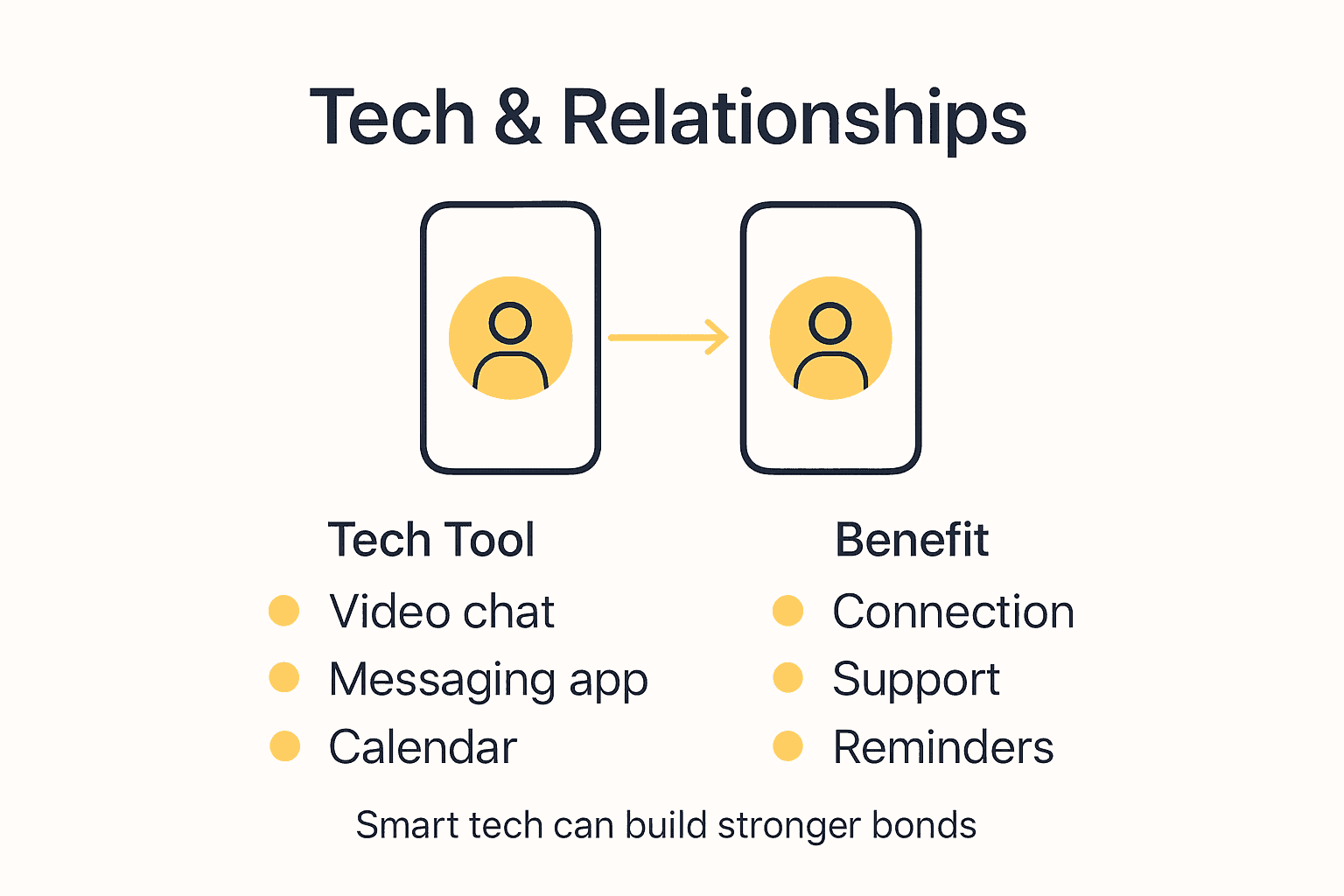
Technology’s most significant contribution to relationship dynamics lies in its ability to democratize emotional support and learning. Digital platforms break down traditional barriers by providing accessible, personalized relationship coaching, therapy resources, and skill-building tools. These innovations mean that individuals can now receive professional-grade relationship guidance without geographical or economic limitations. Machine learning algorithms can now predict relationship challenges, suggest communication strategies, and help users develop emotional intelligence skills that were previously accessible only through expensive personal therapy or extensive personal development programs.
Below is a summary of modern technology’s influence on relationship dynamics:
Technology Aspect | Relationship Impact | Example Tool or Feature |
|---|---|---|
Emotional AI Platforms | Improves self-awareness | Sentiment analysis apps |
Digital Therapy Resources | Increases access to support | Online counseling platforms |
Communication Guidance | Enhances conflict resolution | Real-time coaching bots |
Connectedness Tools | Maintains emotional intimacy | Shared digital journals |
Pro tip: Leverage technology as a complementary tool for relationship growth by using AI-powered communication insights, but always prioritize genuine human connection and direct personal communication.
Common Pitfalls and How to Avoid Them
Comprehensive relationship research reveals that most relationship challenges stem from predictable patterns of miscommunication, unaddressed emotional needs, and unconscious behavioral cycles. Understanding these common pitfalls is crucial for developing more resilient, compassionate connections that can withstand life’s inevitable complexities. Relationships are dynamic systems that require ongoing maintenance, self-awareness, and intentional communication strategies.
The most prevalent relationship pitfalls typically manifest through several key destructive patterns. Communication breakdown represents the primary challenge, characterized by defensive listening, assumption-making, and emotional invalidation. Other critical pitfalls include unresolved conflict avoidance, emotional stonewalling, unrealistic expectations, and failure to maintain individual boundaries. These patterns often emerge from unprocessed personal traumas, learned communication habits, and insufficient emotional intelligence skills. Recognizing these patterns early allows individuals to interrupt negative cycles and redirect relationship dynamics toward more constructive interactions.
Addressing relationship challenges requires a proactive, strategic approach that combines self-reflection, emotional intelligence, and intentional communication skills. This involves developing the capacity to identify personal triggers, practice active listening, communicate needs clearly and respectfully, and maintain healthy emotional boundaries. Successful relationship navigation demands continuous learning, vulnerability, and a commitment to personal growth. Individuals must be willing to examine their own behavioral patterns, take responsibility for their emotional responses, and approach conflicts as collaborative problem-solving opportunities rather than adversarial confrontations.
Pro tip: Practice a monthly relationship audit by scheduling dedicated time to discuss challenges, celebrate progress, and realign mutual expectations with genuine, non-defensive communication.
Strengthen Your Relationships with Smart, Compassionate Support
Building and maintaining good relationships requires intentional nurturing, honest communication, and emotional insight as highlighted in the article “Good Relationships: How Healthy Bonds Shape Our Lives.” If you struggle with managing emotional dynamics or want to deepen your connections across romantic, family, or professional bonds, using an AI-powered emotional coach can be a game changer. The Wisdom App brings live emotion detection, context-aware communication guidance, and strategic advice right to your WhatsApp chat. This means you can practice empathy, improve conflict resolution, and build lasting trust anytime without disrupting your daily routine.
Stop letting miscommunication or unclear boundaries strain your relationships when proactive support is just a message away. Experience how a superintelligent AI agent can transform your personal growth and relationship satisfaction with tools inspired by psychology, philosophy, and emotional intelligence. Take the first step toward healthier, more fulfilling connections by signing up for the Wisdom App today and discover personalized advice designed specifically for your unique emotional landscape. Explore how an AI emotional coach can enhance your communication skills and relationship resilience now.
Frequently Asked Questions
What are the key traits of healthy relationships?
Healthy relationships are characterized by trust, mutual respect, effective communication, emotional support, and adaptability. These elements create a strong emotional foundation that fosters individual growth and well-being.
How can technology improve relationship dynamics?
Technology enhances relationship dynamics by offering tools for emotional intelligence, communication insights, and online support resources. These innovations help individuals navigate conflicts, improve self-awareness, and maintain emotional intimacy across distances.
What types of positive relationships exist?
Positive relationships can be categorized into intimate partnerships, familial bonds, friendship networks, professional relationships, and community connections. Each type offers unique emotional benefits and contributes to overall well-being.
How can I avoid common relationship pitfalls?
To avoid common pitfalls such as communication breakdown and unresolved conflicts, practice active listening, express your needs clearly, and maintain healthy emotional boundaries. Regularly reflecting on your relationship patterns can help you redirect negative dynamics.
Recommended
7 Essential Long Distance Relationship Communication Tips - Wisdom
7 Inspiring Partner Relationship Management Examples for Success - Wisdom
7 Steps to Build Your Emotional Wellbeing Checklist Today - Wisdom
Understanding Why Emotional Wellbeing Matters for You - Wisdom
Sustainable Wellness: Transforming Everyday Health Habits – EQUA - Sustainable Water Bottles