Nov 26, 2025
Role of AI in Emotional Growth Explained
AI emotional coach: comprehensive guide to AI's role in emotional intelligence, real-time support, privacy features, and relationship development.

Role of AI in Emotional Growth Explained
Nearly 60 percent of american adults now use technology to support their mental health, yet few realize how artificial intelligence is quietly transforming emotional growth strategies. As everyday life becomes more complex, maintaining emotional balance and strong relationships can feel like a constant challenge. This article uncovers how AI is shaping emotional intelligence for americans, highlighting practical benefits, privacy concerns, and the evolving ways technology guides personal development.
Table of Contents
Defining AI’s Role In Emotional Growth
Types Of AI Emotional Intelligence Tools
How AI Detects And Analyzes Emotions
Real-World Applications In Relationships
Privacy, Security, And Ethical Considerations
Challenges And Limitations Of AI Coaching
Key Takeaways
Point | Details |
|---|---|
Personalized Insights | AI emotional coaching offers real-time, data-driven insights for individual emotional growth, adapting to personal communication styles. |
Immediate Support | AI tools provide unbiased, instant feedback, making emotional coaching accessible anytime, unlike traditional therapy. |
Innovative Tools | Advanced technologies like emotion recognition and speech analysis enhance understanding of complex emotional states. |
Ethical Considerations | The integration of AI in emotional support raises significant privacy and ethical concerns that must be addressed for safe implementation. |
Defining AI’s Role in Emotional Growth
Artificial Intelligence is revolutionizing emotional growth by offering personalized, data-driven insights into human psychological development. Unlike traditional coaching methods, AI introduces a nuanced approach to understanding emotional intelligence that adapts in real time. This technological breakthrough transforms how individuals perceive, process, and progress through their emotional landscapes.
At its core, AI emotional coaching represents a sophisticated intersection of psychology, machine learning, and human-centered design. By analyzing communication patterns, emotional responses, and contextual interactions, AI can detect subtle emotional nuances that humans might overlook. These intelligent systems leverage advanced algorithms to provide targeted recommendations that support personal development, relationship management, and self-awareness.
The strategic value of AI in emotional growth emerges through its ability to offer unbiased, instantaneous feedback. Traditional therapy or counseling often requires scheduling, significant financial investment, and potential human bias. In contrast, AI-powered emotional coaching provides immediate, confidential support accessible directly through digital platforms like understanding the benefits of AI emotional support. These intelligent systems can track emotional progression, suggest communication strategies, and help users develop more profound emotional intelligence skills without judgment or time constraints.
Key attributes of AI in emotional growth include its capacity to:
Provide real-time emotional analysis
Generate personalized developmental strategies
Maintain consistent, judgment-free interaction
Adapt recommendations based on individual communication styles
Support continuous self-improvement through data-driven insights
By combining psychological expertise with technological precision, AI is transforming emotional development from a reactive process to a proactive, strategic journey of personal growth.
Types of AI Emotional Intelligence Tools
AI emotional intelligence tools represent a cutting-edge technological approach to understanding and managing human emotions through sophisticated digital platforms. These tools leverage advanced algorithms and machine learning techniques to analyze, interpret, and respond to complex emotional states with unprecedented precision. From conversational AI assistants to complex emotion detection systems, the landscape of emotional intelligence technology continues to expand rapidly.
Emotion recognition technologies have emerged as a pivotal category of AI emotional intelligence tools. Affectiva has developed groundbreaking Emotion AI technology capable of detecting nuanced emotional cues through facial expressions, vocal intonations, and body posture. This approach allows for comprehensive emotional analysis across various contexts, enabling more sophisticated understanding of human psychological states. Such technologies can interpret subtle emotional signals that might escape human perception, providing insights into complex interpersonal dynamics.
Another significant category includes audio-based emotion analysis tools. OpenSMILE, a powerful tool for automatic feature extraction from audio signals, represents a sophisticated approach to emotion recognition. By analyzing speech and vocal characteristics, these systems can detect emotional undertones, stress levels, and psychological states through sound patterns. This technology finds applications in multiple domains, including mental health support, customer service interactions, and personalized communication strategies.
The primary types of AI emotional intelligence tools include:
Facial emotion recognition systems
Voice and speech analysis platforms
Conversational AI emotional coaches
Sentiment analysis algorithms
Behavioral pattern detection tools
Through AI emotional intelligence: Complete Guide for 2025, we can see how these technologies are transforming our understanding of human emotional experiences, offering unprecedented insights into psychological well-being and interpersonal communication.

How AI Detects and Analyzes Emotions
Emotion detection represents a complex technological frontier where artificial intelligence transforms human psychological understanding through sophisticated analytical techniques. By integrating advanced machine learning algorithms, computer vision, and linguistic processing, AI systems can now interpret emotional states with remarkable precision and depth. These technological breakthroughs enable unprecedented insights into human psychological experiences.
Affectiva has pioneered groundbreaking approaches in emotion detection, employing deep learning and computer vision technologies to analyze human facial expressions in real-time. Their AI can identify key facial features, map intricate emotional responses, and even detect cognitive states like drowsiness or distraction. This technology goes beyond simple emotion classification, providing nuanced understanding of human psychological landscapes by examining subtle shifts in facial muscle movements, eye tracking, and body posture.
Researchers are continuously expanding emotional analysis capabilities. The HICEM model represents a significant advancement, proposing a comprehensive framework for artificial emotional intelligence by defining a core set of 15 discrete emotions. By utilizing unsupervised clustering techniques and advanced word embeddings, this approach enables more robust and language-independent emotional analysis. Such innovations demonstrate how AI can transcend traditional emotional recognition limitations, offering more sophisticated and context-aware interpretations.
Key methodologies in AI emotion detection include:
Facial expression analysis
Voice tone and pitch tracking
Physiological signal monitoring
Natural language processing
Behavioral pattern recognition
To gain deeper insights into these transformative technologies, explore what is emotional intelligence, which provides a comprehensive breakdown of how artificial intelligence is revolutionizing our understanding of human emotional experiences.
Real-World Applications in Relationships
Artificial intelligence is revolutionizing relationship dynamics by providing unprecedented insights into emotional communication, conflict resolution, and interpersonal understanding. As technology advances, AI tools are becoming increasingly sophisticated in supporting and enhancing human connections across various relationship contexts, from romantic partnerships to professional collaborations and family interactions.
In the realm of family dynamics, emerging technologies are transforming how people interact and learn together. eaSEL system represents a groundbreaking approach to social-emotional learning, integrating innovative curricula into children’s digital experiences. By generating reflection activities and facilitating parent-child discussions around media consumption, this technology bridges generational communication gaps and promotes deeper emotional understanding within family units.
The broader implications of technological integration in relationships are profound and far-reaching. Relationships 5.0 explores how emerging technologies like AI, virtual reality, and robotics are fundamentally reshaping human emotional connections. These innovations provide new platforms for communication, emotional intelligence development, and interpersonal skill enhancement, challenging traditional relationship paradigms and offering more nuanced, adaptive interaction models.
Key real-world AI relationship applications include:
Emotion recognition in communication
Conflict resolution strategy recommendations
Personalized communication skill training
Relationship health predictive analytics
Emotional intelligence skill development
For couples seeking to leverage these transformative technologies, 7 best emotional intelligence tools for couples offers a comprehensive exploration of cutting-edge relationship support technologies.
Privacy, Security, and Ethical Considerations
As artificial intelligence becomes increasingly integrated into emotional support and personal development platforms, critical questions surrounding privacy, security, and ethical implementation have emerged as paramount concerns. The potential for AI to access deeply personal emotional data requires a robust framework of protection, transparency, and responsible technological design that prioritizes user autonomy and psychological safety.
Research from Language Testing Asia highlights the critical importance of addressing ethical considerations in AI-enhanced environments, particularly concerning data privacy and potential impacts on emotional well-being. The study emphasizes that AI tools must be carefully implemented to genuinely support rather than potentially compromise individual psychological development. This requires a nuanced approach that balances technological capability with human-centered ethical standards.
MDPI research further explores the complex ethical landscape of AI emotional support, identifying key challenges such as algorithmic bias, data privacy risks, and the potential dangers of over-reliance on technological solutions for emotional guidance. The research underscores the necessity of developing AI systems with robust safeguards that protect user vulnerability and maintain strict boundaries between technological assistance and genuine human emotional connection.
Key ethical considerations in AI emotional support include:
Comprehensive data encryption protocols
Transparent user consent mechanisms
Protection against algorithmic bias
Clear boundaries of AI intervention
User control over personal emotional data
Understanding the importance of privacy in family chat apps provides additional insights into maintaining secure digital emotional support environments that respect individual privacy and psychological integrity.
Challenges and Limitations of AI Coaching
Artificial intelligence in emotional coaching represents a powerful technological innovation, but it is not without significant challenges and inherent limitations. While AI offers unprecedented insights and support, it cannot fully replicate the nuanced, empathetic understanding that human emotional interactions provide. Understanding these limitations is crucial for users seeking meaningful personal growth and emotional development.
Reflexion, an AI-powered platform for emotional self-reflection, demonstrates both the potential and constraints of technological emotional guidance. The research highlights critical limitations, including the necessity for user motivation and the potential for misinterpretation of AI-generated prompts. These challenges underscore the importance of carefully designed AI systems that complement rather than attempt to completely replace human emotional intelligence and therapeutic interactions.
PACEE system research further illuminates the complex landscape of AI emotional coaching, particularly in family and child-oriented contexts. The study reveals significant challenges in ensuring AI guidance aligns with individual family values and maintaining meaningful parental involvement. This emphasizes that AI coaching tools must be viewed as collaborative support mechanisms rather than standalone solutions, requiring continuous human oversight and interpretation.
Key challenges in AI emotional coaching include:
Limited contextual and emotional nuance understanding
Potential for algorithmic bias
Lack of genuine empathetic connection
Dependency risks and over-reliance on technological solutions
Difficulty interpreting complex emotional states
For a comprehensive understanding of navigating these challenges, explore AI-Driven Emotional Guidance: Complete Overview, which provides deeper insights into responsible and effective AI emotional support strategies.
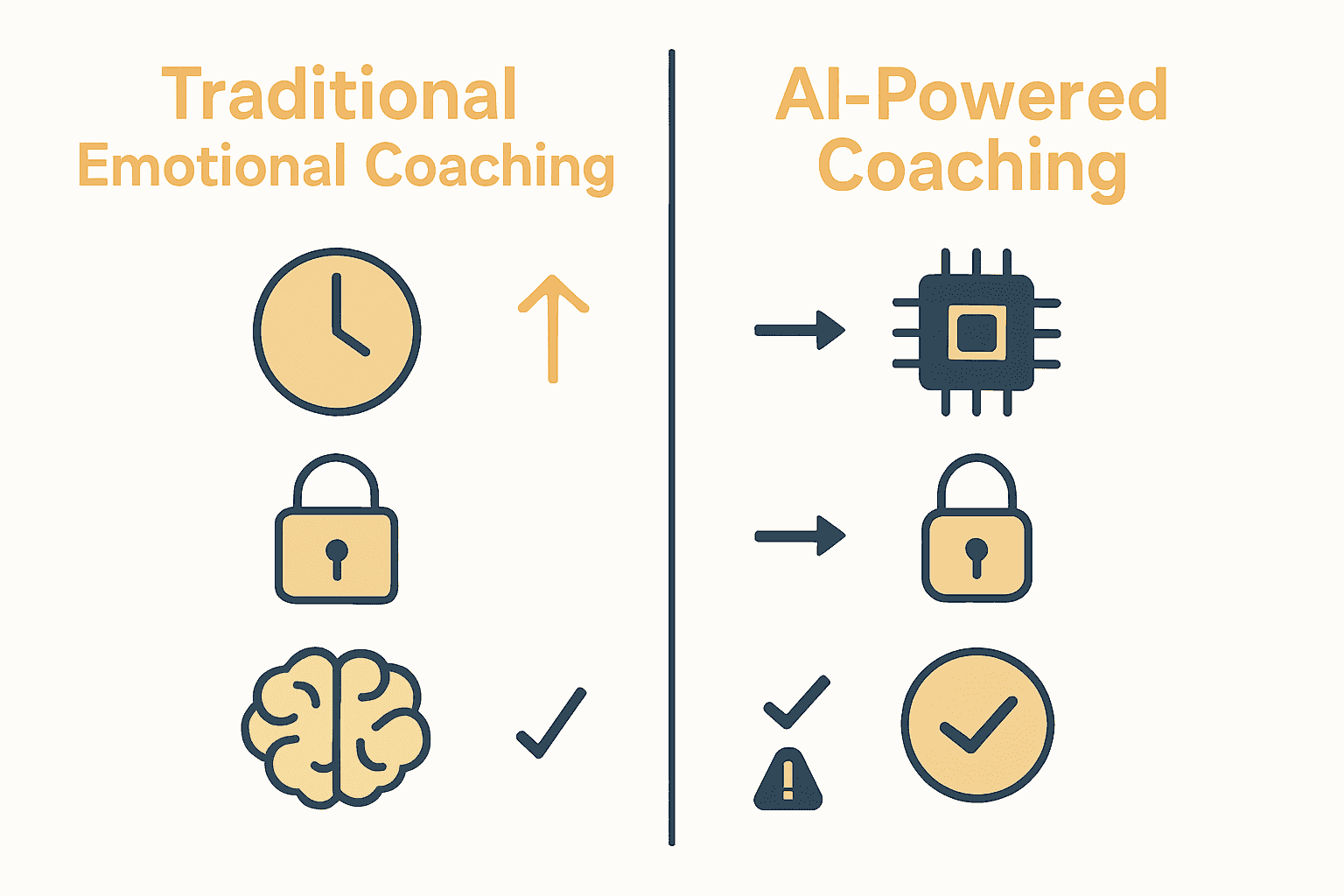
Transform Your Emotional Growth with AI-Powered Coaching
The article highlights the growing role of AI in providing real-time emotional analysis, personalized growth strategies, and unbiased support to help navigate complex emotional landscapes. If you find yourself wanting deeper emotional awareness, better communication skills, or strategic relationship guidance, Wisdom App offers a powerful solution designed to meet these exact challenges. By combining live emotion detection with relationship superintelligence, Wisdom acts as a wise, compassionate coach inside your WhatsApp chats, adapting uniquely to each connection.

Start unlocking your emotional potential today by experiencing the world’s first AI emotional coach for WhatsApp. With privacy-first design and psychology-backed insights, Wisdom helps you develop emotional intelligence and relationship skills effortlessly. Take the next step toward smarter love, work, and family connections now at Wisdom App sign in. Explore how advanced AI coaching can transform your conversations into lasting growth by visiting AI-driven emotional guidance: complete overview and learn more about understanding the benefits of AI emotional support to see why thousands trust Wisdom as their daily digital companion.
Frequently Asked Questions
What is AI emotional coaching?
AI emotional coaching utilizes artificial intelligence to provide personalized insights and recommendations for emotional growth, adapting in real-time to users’ communication patterns and emotional responses.
How does AI detect and analyze emotions?
AI employs advanced techniques such as facial recognition, voice tone analysis, and natural language processing to interpret emotional states, offering precise insights into human psychological experiences.
What are the key benefits of using AI for emotional growth?
Key benefits include real-time emotional analysis, personalized developmental strategies, consistent support without judgment, and the ability to adapt recommendations based on individual communication styles.
What challenges does AI face in emotional coaching?
Challenges include limited understanding of emotional nuance, the risk of algorithmic bias, potential lack of empathetic connection, and the danger of users becoming overly reliant on technology for emotional guidance.
Recommended