Dec 10, 2025
Why Emotional Insights Fuel Business Success Today
AI emotional coach tools reveal how emotional insights boost leadership, team dynamics, and customer loyalty, improving business outcomes securely.

Why Emotional Insights Fuel Business Success Today
Most American professionals underestimate the power of emotional insights, yet studies show that teams with high emotional intelligence are over 30 percent more productive. In the modern workplace, understanding emotions goes far beyond just feeling them. It directly shapes how leaders, teams, and organizations perform every day. This guide uncovers the real value of reading and using emotional signals, revealing practical ways emotional awareness can transform communication, teamwork, and business results.
Table of Contents
Emotional Insights Defined And Their Value
Types Of Emotional Intelligence In Business
How Businesses Use Emotional Data Effectively
Impact On Leadership, Teams, And Innovation
Risks Of Neglecting Emotional Dynamics
Choosing Between AI Coaches And Traditional Approaches
Key Takeaways
Point | Details |
|---|---|
Emotional Insights | Understanding human emotions enhances communication, conflict resolution, and team collaboration in professional settings. |
Types of Emotional Intelligence | Developing self-awareness, self-management, social awareness, and relationship management is crucial for effective leadership and teamwork. |
Impact on Leadership | Leaders utilizing emotional intelligence can foster psychological safety and increase employee engagement, driving innovation and adaptability. |
Risks of Neglect | Ignoring emotional dynamics can lead to increased conflict, reduced collaboration, and diminished organizational performance. |
Emotional Insights Defined And Their Value
Emotional insights represent the nuanced understanding of human emotions and their intricate role in professional interactions. These insights go beyond simple feelings, offering a strategic lens through which individuals can decode complex interpersonal dynamics and drive meaningful organizational outcomes.
At their core, emotional insights encompass the ability to recognize and interpret emotional signals with precision and empathy. They involve understanding not just surface-level reactions, but the deeper psychological motivations driving human behavior. In business contexts, these insights enable leaders to navigate challenging conversations, build robust team relationships, and create environments where psychological safety and performance coexist.
The value of emotional insights extends across multiple professional domains. Key capabilities include:
Enhanced communication strategies
More effective conflict resolution
Improved leadership decision making
Better team collaboration
Increased organizational adaptability
Professionals who develop strong emotional intelligence competencies can transform workplace dynamics. They become adept at reading unspoken tensions, anticipating team members’ needs, and creating alignment even in high-pressure scenarios. These skills are not soft advantages but critical strategic tools that directly impact productivity, employee engagement, and bottom-line performance.
Types Of Emotional Intelligence In Business
Emotional intelligence in business is a multifaceted concept with distinct interconnected components that drive professional success. Understanding these different types helps professionals develop targeted skills that enhance workplace performance and interpersonal effectiveness.

Self-Awareness represents the foundational type of emotional intelligence. This dimension involves recognizing personal emotions, understanding their triggers, and comprehending how these feelings impact professional behavior. Leaders with strong self-awareness can identify their strengths, weaknesses, and emotional patterns, enabling more authentic and strategic interactions.
The four primary types of emotional intelligence in business include:
Self-Awareness: Understanding personal emotional landscapes
Self-Management: Regulating emotions and maintaining professional composure
Social Awareness: Reading and interpreting others’ emotional signals
Relationship Management: Navigating interpersonal dynamics effectively
Professionals who master these emotional intelligence competencies can transform workplace interactions. By developing nuanced emotional skills, individuals create more collaborative environments, communicate more effectively, and respond to challenges with greater resilience and strategic insight. These skills are not just psychological advantages but critical professional tools that directly influence team dynamics, leadership effectiveness, and organizational success.
How Businesses Use Emotional Data Effectively
Businesses today are revolutionizing decision-making by systematically analyzing emotional signals through advanced technologies. These sophisticated approaches transform raw emotional data into strategic insights that drive organizational performance, customer engagement, and competitive advantage.
Emotional data collection has evolved far beyond traditional methods. Companies now utilize cutting-edge techniques like automated emotion recognition, which captures nuanced emotional states through multiple channels including facial expressions, voice patterns, text analysis, and even neurological signals. This granular approach allows businesses to understand human experiences with unprecedented depth and precision.
Key strategies for leveraging emotional data include:
Analyzing executive communication patterns
Tracking customer sentiment in real-time
Predicting market reactions through emotional intelligence
Enhancing employee engagement and workplace dynamics
Developing targeted marketing and communication strategies
Innovative organizations are using cognitive analytics to predict firm performance by examining emotional content in leadership communications. By interpreting subtle emotional signals, businesses can anticipate market shifts, improve decision-making processes, and create more responsive, empathetic organizational cultures that translate emotional intelligence directly into competitive advantage.
Impact On Leadership, Teams, And Innovation
Emotional intelligence fundamentally transforms organizational dynamics by reshaping how leaders interact with teams and drive innovation. Leadership effectiveness is directly correlated with emotional understanding, creating a profound ripple effect across entire organizational ecosystems.
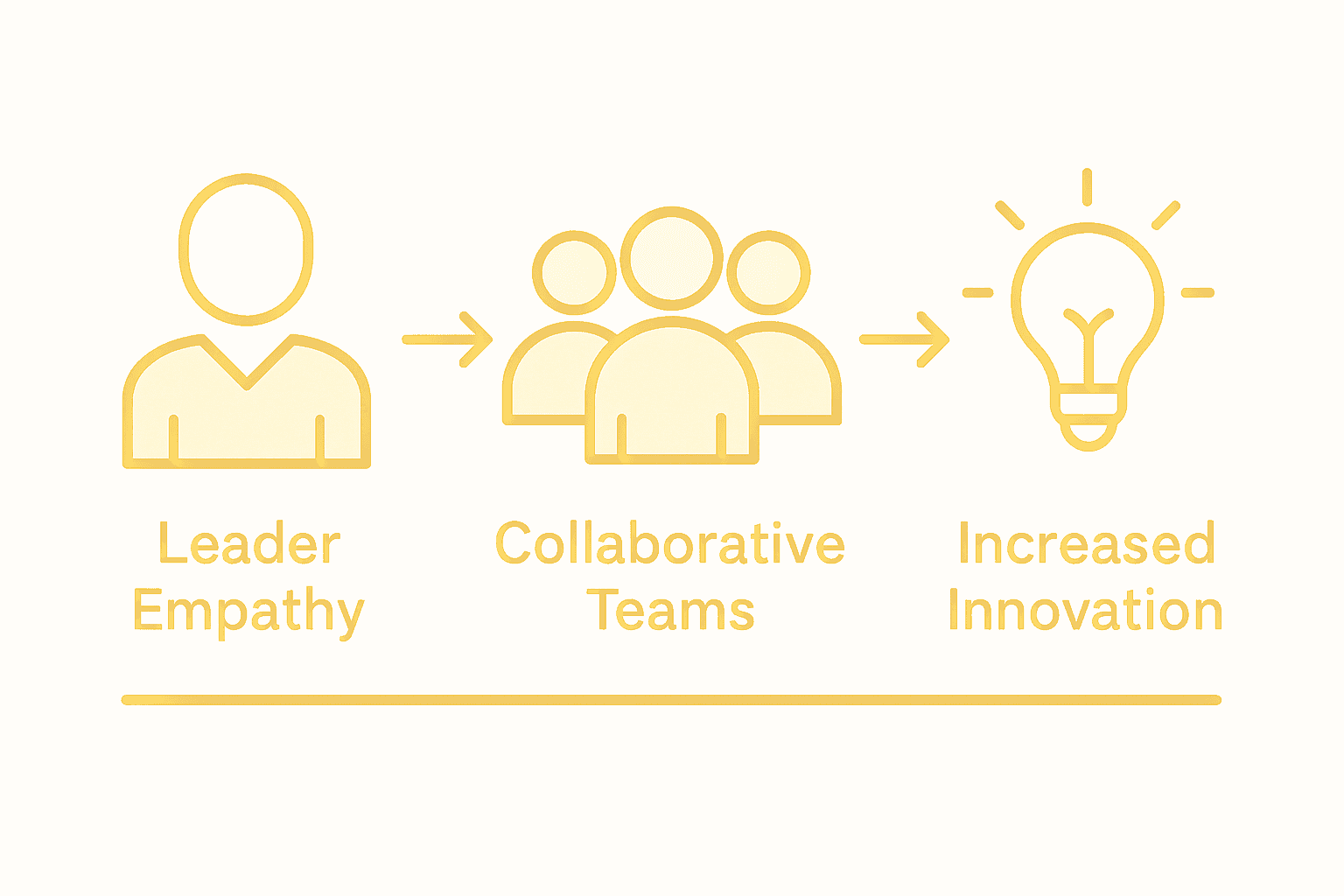
In modern business environments, emotional intelligence serves as a critical catalyst for team performance. Leaders who demonstrate high emotional awareness can navigate complex interpersonal landscapes, transforming potential conflicts into collaborative opportunities. By understanding and responding to team members’ emotional states, these leaders create psychological safety, encourage open communication, and build resilient organizational cultures that adapt quickly to changing challenges.
Key impacts of emotional intelligence on organizational success include:
Enhanced conflict resolution capabilities
Improved team communication
Increased employee engagement
More effective change management
Higher innovation potential
Emotional intelligence contributes significantly to team dynamics and organizational innovation, enabling leaders to inspire commitment, align diverse talents, and create environments where creativity and strategic thinking flourish. By developing empathy, social skills, and emotional self-regulation, leaders can transform traditional hierarchical structures into dynamic, responsive networks that continuously generate breakthrough insights and competitive advantages.
Risks Of Neglecting Emotional Dynamics
Emotional neglect represents a critical organizational vulnerability that can silently erode business performance and workplace culture. Organizations face substantial risks when they fail to understand and address emotional dynamics, creating environments prone to conflict, miscommunication, and reduced productivity.
The consequences of emotional ignorance extend far beyond interpersonal tensions. When leaders and teams disregard emotional intelligence, they create systemic breakdowns that manifest through increased employee turnover, decreased team cohesion, and a toxic work environment. These subtle yet profound disruptions can dramatically undermine an organization’s strategic objectives and competitive positioning.
Key risks of neglecting emotional dynamics include:
Increased workplace conflicts
Higher employee stress levels
Reduced team collaboration
Lower innovation and creativity
Diminished organizational adaptability
Potential ethical challenges in data management
Emerging technologies like AI-driven emotion recognition highlight the complex ethical landscape of emotional data management. Businesses that fail to develop sophisticated emotional intelligence risk not only internal dysfunction but also potential breaches of trust, privacy violations, and reputational damage. By contrast, organizations that prioritize emotional understanding can transform these challenges into opportunities for deeper human connection, more meaningful workplace interactions, and sustainable competitive advantage.
Choosing Between AI Coaches And Traditional Approaches
Emotional coaching has entered a transformative era where technological innovation and human expertise intersect. AI-based emotion recognition technologies offer unprecedented real-time emotional analysis, presenting professionals with sophisticated alternatives to traditional coaching methodologies.
The landscape of emotional intelligence development now presents a nuanced spectrum of approaches. AI coaches deliver data-driven insights with remarkable consistency and scalability, capable of processing complex emotional signals instantaneously. Traditional human coaches, conversely, bring profound empathetic understanding, contextual interpretation, and adaptive communication strategies that machines cannot fully replicate.
Key comparative dimensions include:
Speed of emotional insight generation
Depth of personalized interpretation
Cost-effectiveness
Privacy and ethical considerations
Scalability of support
Emotional nuance and context understanding
Traditional coaching methods continue to provide uniquely tailored emotional intelligence development, emphasizing personal interaction and human-centered feedback. While AI technologies offer remarkable analytical capabilities, they cannot entirely replace the intuitive, empathetic guidance that experienced human coaches provide. The most effective approach likely involves a hybrid model that combines technological precision with human emotional intelligence, creating a comprehensive support ecosystem for professional and personal growth.
Unlock the Power of Emotional Insights with AI Coaching Today
The article highlights the critical challenge businesses face in truly understanding and leveraging emotional dynamics to boost leadership, team collaboration, and innovation. If you struggle with decoding complex emotional signals or want to enhance your emotional intelligence for better relationship management at work and beyond, Wisdom App offers a transformative solution. It uses live emotion detection, relationship superintelligence, and data-driven insights to help you navigate emotional nuances effortlessly—making emotional insights a practical tool in your daily conversations.
Experience how the world’s first AI emotional and relationship coach on WhatsApp can become your invisible life mentor. Start improving your self-awareness, communication, and emotional regulation now by signing up at Wisdom App. See why thousands trust this superintelligent AI agent to transform personal and professional relationships with strategic emotional guidance. Don’t wait—turn emotional intelligence from a challenge into your strongest advantage today with AI emotional coach technology built to empower you.
Frequently Asked Questions
What are emotional insights?
Emotional insights are a nuanced understanding of human emotions and their role in professional interactions, enabling individuals to decode complex interpersonal dynamics and drive positive organizational outcomes.
How do emotional insights benefit businesses?
Emotional insights enhance communication strategies, improve conflict resolution, boost leadership decision-making, foster team collaboration, and increase organizational adaptability, leading to better overall performance.
What are the key components of emotional intelligence in business?
The key components of emotional intelligence in business include self-awareness, self-management, social awareness, and relationship management, each contributing to effective interpersonal interactions and leadership.
How can businesses effectively use emotional data?
Businesses can leverage emotional data by analyzing communication patterns, tracking customer sentiment, predicting market reactions through emotional intelligence, and enhancing employee engagement, all of which contribute to organizational success.
Recommended