Dec 18, 2025
Master the Self-Awareness Improvement Process Easily
Follow a clear self-awareness improvement process to boost emotional intelligence, deepen relationships, and achieve personal growth with actionable AI-powered steps.

Master the Self-Awareness Improvement Process Easily
Most American adults say self awareness is the foundation of lasting change, yet only about one in ten believe they truly know themselves deeply. Modern life makes personal reflection more challenging than ever, leaving many in search of tools that actually lead to insight and growth. This practical guide cuts through the noise, offering clear, step by step strategies to help you build real self understanding and transform everyday choices.
Table of Contents
Step 1: Set Intentions for Personal Discovery
Step 2: Track Emotions Using Digital Coaching
Step 3: Reflect on Real-Time Interactions
Step 4: Identify Patterns in Thought and Behavior
Step 5: Apply Insights to Everyday Choices
Step 6: Measure Progress Toward Greater Self-Awareness
Quick Summary
Key Message | Explanation |
|---|---|
1. Set Clear Intentions | Define specific actionable intentions that reflect your true values for personal growth. |
2. Utilize Digital Coaching | Use digital platforms to consistently track and analyze your emotional experiences for better self-understanding. |
3. Reflect After Interactions | Document and analyze key interactions to uncover emotional patterns and improve communication skills. |
4. Identify Behavioral Patterns | Create a journal to recognize and understand your mental and behavioral responses to enhance emotional intelligence. |
5. Measure Your Progress | Use both qualitative and quantitative metrics to track your self-awareness journey and acknowledge incremental growth. |
Step 1: Set Intentions for Personal Discovery
Setting intentions is a powerful catalyst for personal growth and self-discovery. Your intentions serve as a compass, guiding you toward meaningful transformation by deliberately aligning your daily actions with your deepest values and aspirations.
Begin by creating a quiet moment of reflection where you can honestly assess your current life landscape. Philosophical approaches to intention setting suggest that true personal discovery emerges when we consciously connect our inner motivations with deliberate actions. Start by asking yourself profound questions: What truly matters to me? What experiences do I want to create? What personal qualities do I want to develop?
Write down your intentions using clear, positive language that resonates with your authentic self. Instead of vague statements like “I want to be better,” craft specific, actionable intentions such as “I intend to cultivate patience in challenging conversations” or “I commit to understanding my emotional triggers.” These carefully crafted intentions become your personal roadmap, transforming abstract desires into tangible growth opportunities.
Remember that intention setting is not a one-time event but an ongoing practice. Revisit and refine your intentions regularly, allowing them to evolve as you gain deeper self-understanding. Your intentions are living declarations of personal commitment, dynamic guides that adapt and grow alongside your own journey of self-discovery.
Step 2: Track Emotions Using Digital Coaching
Digital coaching offers a revolutionary approach to emotional tracking, transforming how we understand and manage our inner experiences. By leveraging advanced technologies, you can gain unprecedented insights into your emotional landscape and personal growth patterns.

Advanced emotion tracking frameworks demonstrate how intelligent systems can capture nuanced emotional states in real time. Begin by selecting a digital coaching platform that allows you to log your emotional experiences consistently. When documenting your feelings, focus on specifics beyond basic mood labels. Instead of simply writing “I feel bad,” describe the emotional texture what triggered the feeling, its intensity, and how it manifests physically and mentally.
Technology like affective visual journaling systems can help transform your emotional data into meaningful insights. Most digital coaching tools offer features like sentiment analysis, mood trend tracking, and pattern recognition. These systems do more than record emotions they help you understand the underlying dynamics driving your emotional responses. Pay attention to recurring patterns, identify emotional triggers, and observe how different contexts influence your emotional states.
Consistent tracking creates a powerful feedback loop. As you become more aware of your emotional landscape, you will develop greater emotional intelligence and self regulation skills. Your digital coaching companion becomes a mirror reflecting your inner world, helping you navigate complex emotional terrain with increased clarity and compassion.
Step 3: Reflect on Real-Time Interactions
Reflection is the cornerstone of personal growth, transforming ordinary interactions into profound learning experiences. This step will help you develop a keen awareness of your interpersonal dynamics, uncovering insights that typically remain hidden beneath surface level communications.
Multimodal behavioral analysis frameworks reveal the complex layers of our interactions that extend beyond verbal communication. Start by creating a dedicated reflection space immediately after significant conversations or interactions. Use a digital journal or coaching app to capture nuanced details about the exchange. Document not just what was said, but how it was said your emotional state, the other person’s body language, and the underlying emotional currents that shaped the interaction.
Advanced technologies like teleoperated coaching systems demonstrate how external perspectives can enhance our self understanding. During your reflection, ask yourself critical questions: What triggered specific emotional responses? How did your communication style influence the interaction? Were there moments of disconnection or genuine connection? Pay attention to patterns in your communication approach and emotional reactions.
Remember that reflection is a skill that improves with practice. The goal is not to judge yourself harshly but to cultivate compassionate self awareness. Each interaction becomes an opportunity for growth, offering a mirror into your communication patterns, emotional triggers, and potential areas for personal development. As you continue this practice, youll develop a more nuanced understanding of yourself and your relationships.
Step 4: Identify Patterns in Thought and Behavior
Understanding your mental and behavioral patterns is like decoding a personal blueprint that reveals your deepest motivations, triggers, and unconscious responses. This step empowers you to transform self awareness from an abstract concept into a tangible tool for personal growth.
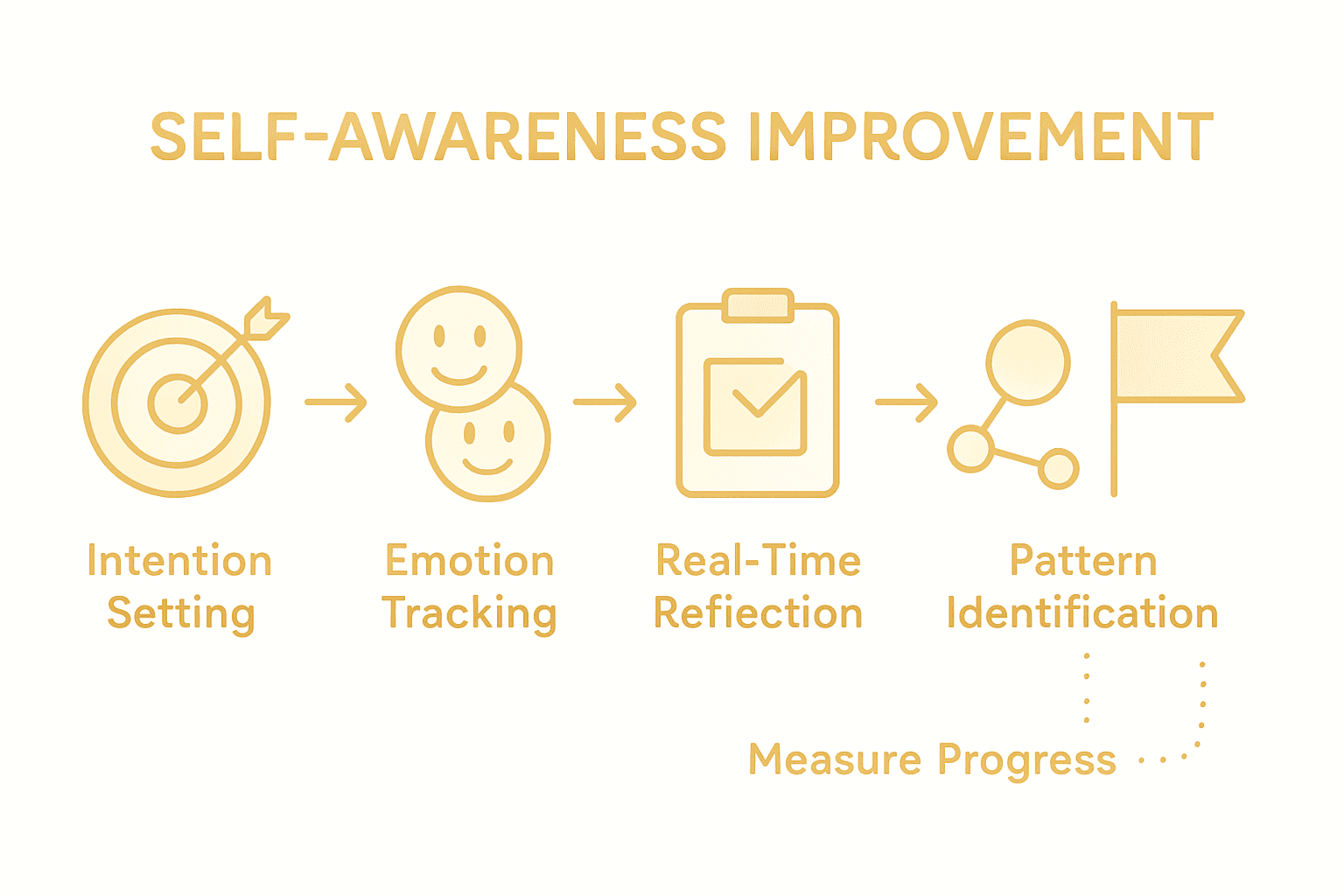
Advanced cognitive pattern detection techniques demonstrate how subtle indicators like emotional responses, communication styles, and nonverbal cues can reveal underlying behavioral frameworks. Begin by creating a comprehensive journal that tracks not just events, but your reactions to them. Note recurring emotional states, typical response mechanisms, and the contexts that trigger specific mental and behavioral patterns.
Research on emotional intelligence and behavioral self regulation highlights the critical role of systematic observation in personal development. Look for consistent themes in your interactions. Do you tend to become defensive under stress? Do you withdraw when feeling vulnerable? Recognize that these patterns are not flaws but adaptive mechanisms developed over time. The goal is not elimination but conscious understanding and strategic modification.
Patterns are not prison walls they are maps. By developing a compassionate and curious approach to your inner landscape, you transform unconscious reactions into intentional responses. Each insight becomes a stepping stone toward greater emotional agility and personal transformation.
Step 5: Apply Insights to Everyday Choices
Transforming self awareness into actionable change requires more than understanding your patterns you must deliberately integrate insights into your daily decision making process. This step bridges the gap between introspection and meaningful personal transformation.
Innovative coaching techniques for digital technology users demonstrate how intentional application of self insights can dramatically improve personal well being. Start by creating a daily practice of mindful decision making. Before responding to challenging situations, pause and ask yourself key reflection questions. What emotional triggers are influencing my current response? How does this choice align with my core values? Am I acting from a place of reaction or intentional choice?
Research on behavioral coaching strategies reveals the power of systematic personal intervention. Develop a personal decision making framework that allows you to consistently apply your self awareness insights. This might involve creating a simple checklist of your identified behavioral patterns or setting up accountability mechanisms that help you recognize and redirect unconscious reactions.
Remember that applying insights is an iterative process. You will not achieve perfection but progress. Celebrate small moments of conscious choice and view setbacks as valuable learning opportunities. Each intentional decision becomes a building block in constructing a more authentic and aligned version of yourself.
Step 6: Measure Progress Toward Greater Self-Awareness
Measuring personal growth requires more than subjective feelings you need systematic approaches that transform abstract insights into tangible evidence of your evolving self awareness. This step provides practical strategies to track and validate your transformative journey.
Electronic health literacy techniques for emotional management offer sophisticated methods to quantify self awareness progress. Create a comprehensive tracking system that includes both quantitative and qualitative measurements. Develop a personal scorecard with specific metrics like emotional resilience, communication effectiveness, and response flexibility. Rate yourself periodically using consistent criteria and document your observations in a dedicated journal or digital tracking tool.
Unobtrusive emotion detection approaches suggest using technology to gain objective insights into your emotional patterns. Consider using digital tools that analyze your communication styles, emotional responses, and behavioral tendencies. Look for consistent improvements in areas like emotional regulation, empathy, and self reflection. Celebrate incremental changes and recognize that personal growth is not about perfection but persistent intentional development.
Remember that progress is not linear. Some weeks you will make significant strides while others might feel like temporary setbacks. The key is maintaining curiosity about your inner landscape and commitment to continuous learning and self discovery.
Enhance Your Self-Awareness Journey with AI-Powered Guidance
Mastering the self-awareness improvement process requires consistent reflection, emotional tracking, and applying insights to daily life. If you find it challenging to identify your emotional patterns or translate your reflections into actionable growth, Wisdom App offers the perfect companion. With its AI emotional coach capabilities, you gain live emotion detection and personalized advice tailored to your unique relationships and communication styles.

Unlock deeper understanding and steer your personal development with the world’s first AI-powered emotional and relationship coach for WhatsApp. Start transforming your conversations into powerful learning moments today by visiting Wisdom Sign In. Take the next step towards mastering your emotions, enhancing your relationships, and achieving lasting self-awareness now.
Frequently Asked Questions
How can I set effective intentions for personal discovery?
Setting effective intentions involves reflecting on what truly matters to you and writing down clear, specific goals that align with your values. Take a quiet moment to ask yourself profound questions and then document actionable intentions, such as “I intend to cultivate patience in challenging conversations.”
What digital coaching methods can I use to track my emotions?
You can track your emotions by selecting a digital coaching platform that allows consistent logging of your emotional experiences. Focus on detailed descriptions of your feelings, their intensity, and the context that triggered them to gain deeper insights.
How can I reflect on real-time interactions to improve my self-awareness?
After significant conversations, create a reflection space to document not just the words exchanged, but also your emotional state and the other person’s body language. Use this information to ask yourself critical questions and uncover insights about your communication style and emotional triggers.
What steps should I take to identify patterns in my thought and behavior?
To identify patterns, start by maintaining a comprehensive journal that tracks your reactions to various events. Note recurring emotional states and responses, allowing you to recognize themes and develop a deeper understanding of your behavioral frameworks.
How can I apply insights from my self-awareness journey to everyday choices?
Integrate your insights by developing a daily practice of mindful decision-making. Before responding to challenging situations, pause to consider your emotional triggers and how your response aligns with your core values.
What are effective ways to measure my progress in self-awareness?
You can measure your progress by creating a tracking system that includes quantitative and qualitative metrics, like emotional resilience and communication effectiveness. Regularly rate yourself on these metrics and document the improvements you observe in your journal.
Recommended