Dec 18, 2025
Emotional Data Analytics: Transforming Relationships With AI
Emotional data analytics empowers AI relationship coaching, live emotion detection, privacy-first insights, and smarter interactions for personal growth.

Emotional Data Analytics: Transforming Relationships With AI
Most American businesses are now investing in emotional data analytics, a field that can interpret feelings with a precision once thought impossible. As digital interactions surge, the ability to understand emotions beyond words has become a critical advantage in both business and personal growth. Discover how this revolutionary technology translates subtle emotional signals into actionable insights that shape deeper connections and drive smarter decisions.
Table of Contents
Defining Emotional Data Analytics and Its Purpose
Types of Emotional Data in AI Coaching
How AI Analyzes Emotions in Conversations
Key Benefits for Relationships and Personal Growth
Privacy, Security, and Ethical Considerations
Key Takeaways
Point | Details |
|---|---|
Emerging Field | Emotional data analytics utilizes advanced AI to interpret complex emotional signals in human interactions. |
Holistic Insights | It transcends traditional metrics by focusing on qualitative emotional contexts, enhancing understanding of communication dynamics. |
Personal Growth | The technology aids in personal development by providing insights into emotional responses and relationship patterns. |
Ethical Considerations | Strong privacy protocols and ethical guidelines are essential for responsible use of emotional data analytics to protect individual rights. |
Defining Emotional Data Analytics and Its Purpose
Emotional data analytics represents a groundbreaking approach to understanding human interactions through sophisticated technological interpretation. At its core, this emerging field uses advanced artificial intelligence to decode complex emotional signals across various communication channels. Emotions analytics software collects and interprets data on verbal and nonverbal communication patterns, providing unprecedented insights into human emotional landscapes.
The primary purpose of emotional data analytics transcends traditional data analysis by focusing on the nuanced emotional contexts embedded within human interactions. Unlike conventional analytics that merely track quantitative metrics, this approach delves into the qualitative realm of feelings, attitudes, and psychological responses. Emotional intelligence algorithms can now detect subtle mood shifts, communication styles, and interpersonal dynamics with remarkable precision. Integrating AI with emotional understanding allows for more empathetic and contextually aware technological interactions.
Practical applications of emotional data analytics span multiple domains, from customer experience optimization to personal relationship management. Businesses can use these insights to improve communication strategies, while individuals can gain deeper self-awareness and enhance their interpersonal skills. The technology enables a more nuanced understanding of human emotions by transforming abstract feelings into measurable, actionable data points. By analyzing communication patterns, tone, word choice, and contextual cues, emotional data analytics provides a comprehensive view of emotional experiences.
Pro Tip - Emotional Analytics Mastery: Start by practicing self-reflection and tracking your own emotional patterns to develop a more intuitive understanding of how emotional data can reveal deeper insights about personal and professional interactions.
Types of Emotional Data in AI Coaching
Emotional data in AI coaching encompasses a sophisticated array of psychological and communicative signals that provide deep insights into human behavior and emotional states. Emotion recognition technologies have evolved to capture multiple layers of emotional information, transforming how we understand interpersonal dynamics. These data types range from verbal communication patterns to nonverbal cues, creating a comprehensive emotional profile that goes far beyond traditional assessment methods.
The primary categories of emotional data in AI coaching include linguistic markers, tone analysis, sentiment tracking, and behavioral pattern recognition. Verbal emotional indicators involve analyzing word choice, speech rhythm, context, and emotional weight of language. Nonverbal data collection might include facial expression analysis, micro-expressions, voice modulation, and physiological responses like heart rate variability. Chatbot interactions in micro-learning environments demonstrate how AI can detect nuanced emotional shifts during communication, capturing subtle changes in engagement and emotional receptivity.

Advanced AI coaching systems integrate multiple emotional data streams to create holistic emotional intelligence assessments. These systems can track emotional trajectories over time, identifying patterns of emotional growth, stress responses, communication effectiveness, and interpersonal skill development. By synthesizing complex emotional data points, AI coaches can provide personalized insights that help individuals understand their emotional landscapes, improve communication strategies, and develop more robust emotional intelligence.
Here is a comparison of primary types of emotional data used in AI coaching:
Data Type | Example Signals | Insight Provided |
|---|---|---|
Linguistic Markers | Word choice, context | Gauge emotional intent |
Tone Analysis | Speech rhythm, pitch | Detect mood variations |
Nonverbal Indicators | Facial expressions, heart rate | Reveal unspoken emotions |
Behavioral Patterns | Response time, engagement level | Identify communication dynamics |
Pro Tip - Emotional Data Mastery: Practice self-awareness by recording and analyzing your own communication patterns, paying attention to your emotional language and nonverbal cues to gain deeper insights into your emotional communication style.
How AI Analyzes Emotions in Conversations
AI emotion analysis represents a sophisticated technological approach to understanding the intricate emotional landscapes within human communication. Contextual Reasoning Networks have revolutionized how artificial intelligence interprets emotional nuances by examining conversations from a comprehensive cognitive perspective. These advanced systems go beyond simple sentiment detection, diving deep into the complex layers of emotional expression that occur during human interactions.
The process of emotion analysis involves multiple sophisticated techniques that capture both verbal and nonverbal emotional signals. Multimodal emotion recognition integrates various data streams, including linguistic patterns, vocal tone, facial expressions, and physiological responses. Recent advances in affective computing demonstrate how AI can now detect subtle emotional shifts by analyzing conversation context, word choice, speech rhythm, and micro-expressions. This approach allows AI to understand emotions not just as isolated moments, but as dynamic, interconnected experiences that evolve throughout a conversation.
Advanced AI emotion analysis systems employ machine learning algorithms that can recognize complex emotional patterns and predict potential emotional trajectories. These systems break down conversations into granular emotional components, identifying underlying feelings that might not be immediately apparent. By tracking emotional transitions, intensity, and context, AI can provide insights into communication dynamics, helping individuals understand their emotional responses and improve interpersonal interactions. The technology goes beyond simple emotion labeling, offering nuanced interpretations that can help users develop greater emotional intelligence and communication skills.
Pro Tip - Emotional Insight Cultivation: Practice active listening and self-reflection by reviewing your conversations through an emotional lens, paying attention to your emotional triggers and communication patterns to enhance your emotional awareness.
Key Benefits for Relationships and Personal Growth
Emotional data analytics transforms personal development by providing unprecedented insights into relationship dynamics and individual growth potential. Coaching techniques designed to enhance well-being have demonstrated remarkable effectiveness in helping individuals understand and improve their emotional landscapes. These advanced approaches leverage sophisticated data analysis to uncover deep-seated patterns of communication, emotional response, and interpersonal interaction that traditional methods often miss.
The key benefits of emotional data analytics extend across multiple dimensions of personal and relational development. Emotional intelligence mapping allows individuals to gain precise insights into their communication styles, emotional triggers, and relationship patterns. AI-based emotional support systems provide nuanced guidance that helps users develop more effective emotional regulation strategies, improve conflict resolution skills, and build more meaningful connections. These technologies can identify subtle emotional dynamics that might otherwise go unnoticed, offering personalized recommendations for personal growth and relationship improvement.
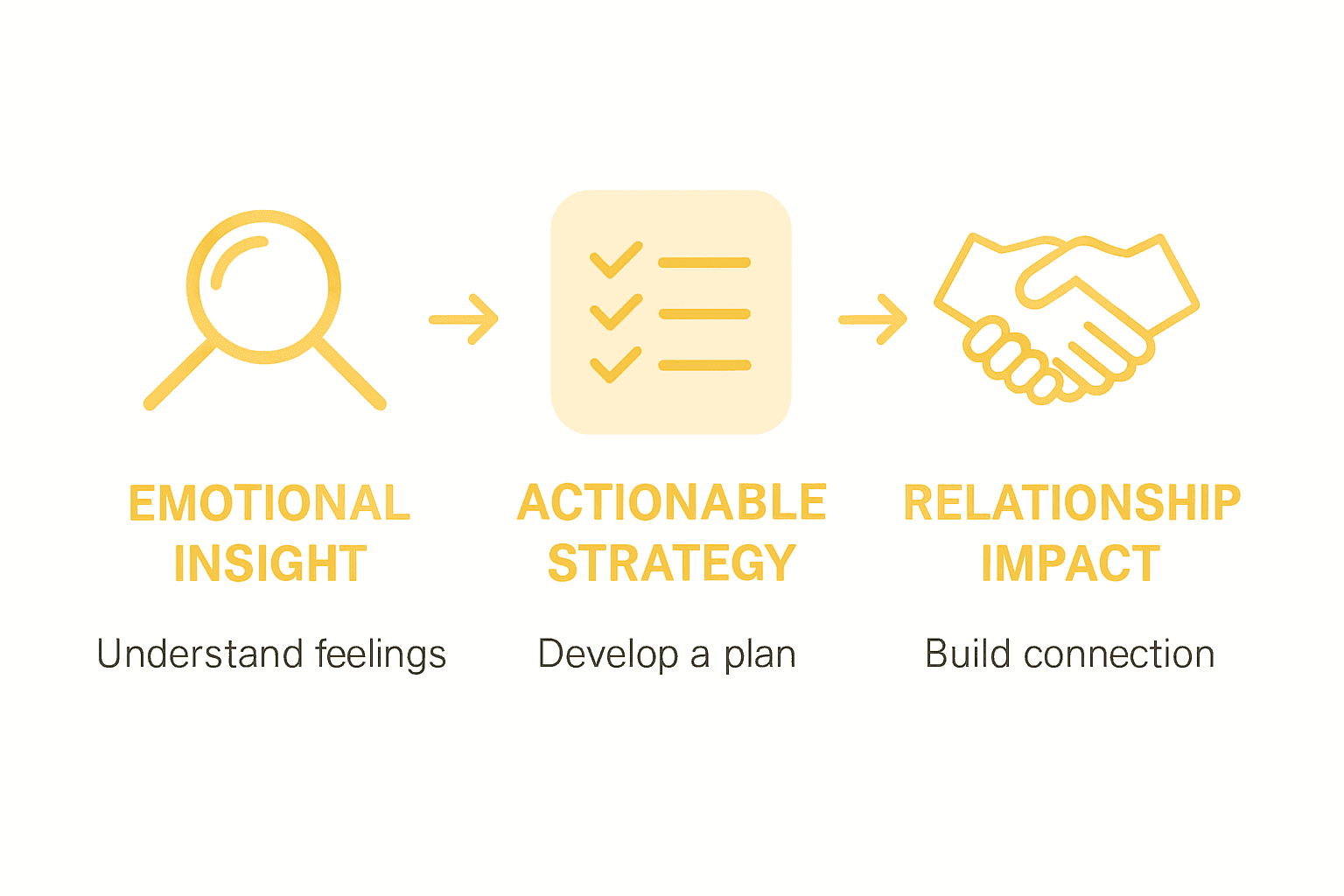
One of the most transformative aspects of emotional data analytics is its ability to provide actionable, data-driven insights into personal development. By tracking emotional trajectories, analyzing communication patterns, and predicting potential relationship challenges, these advanced systems offer a level of self-understanding that was previously impossible. Users can gain deep insights into their emotional responses, learn to recognize and manage emotional patterns, and develop more intentional approaches to personal growth and relationship building. The technology acts as a sophisticated mirror, reflecting emotional intelligence insights that can lead to profound personal transformation.
This summary highlights key benefits of emotional data analytics for personal and relationship growth:
Benefit | Description | Impact on Growth |
|---|---|---|
Emotional Intelligence Mapping | Identifies triggers and patterns | Builds self-awareness |
Conflict Resolution Enhancement | Suggests strategies based on data | Improves relationships |
Personalized Insights | Offers tailored growth recommendations | Enables targeted self-improvement |
Communication Optimization | Analyzes styles and effectiveness | Fosters meaningful connections |
Pro Tip - Emotional Growth Strategy: Commit to weekly self-reflection by reviewing your emotional data insights, identifying one specific area of personal growth to focus on and developing a targeted strategy for improvement.
Privacy, Security, and Ethical Considerations
Emotional data analytics introduces complex ethical challenges that demand rigorous examination of individual privacy and technological boundaries. Large Language Models and emotional intelligence integration raise critical questions about lawful processing of personal emotional data, highlighting the need for transparent frameworks that protect individual autonomy. These advanced technologies must navigate the delicate balance between technological innovation and fundamental human rights to emotional privacy.
Digital emotional sovereignty emerges as a crucial concept in addressing privacy concerns within emotional data analytics. The Emotive Internet landscape reveals the intricate connections between emotion-sensing technologies and potential privacy risks, particularly as artificial intelligence becomes increasingly sophisticated in interpreting human emotional states. Ethical considerations must prioritize user consent, data protection, and the right to control personal emotional information, ensuring that technological insights do not compromise individual psychological boundaries.
Comprehensive privacy protocols are essential in emotional data analytics to maintain user trust and technological integrity. This requires implementing robust security measures that protect sensitive emotional data from unauthorized access, prevent potential misuse, and provide users with clear, granular control over their personal information. Transparency becomes paramount, with AI systems required to clearly communicate how emotional data is collected, processed, analyzed, and potentially shared. Developing stringent ethical guidelines that prioritize user agency, informed consent, and data anonymization will be crucial in building responsible emotional analytics technologies.
Pro Tip - Privacy Protection Strategy: Regularly review and adjust your digital privacy settings, understanding exactly what emotional data you are sharing and maintaining active control over your personal information.
Unlock Deeper Emotional Insights With AI-Powered Coaching
The article highlights the challenge of understanding complex emotional signals and transforming emotional data into actionable insights for better relationships and personal growth. If you want to overcome the pain points of misreading emotional cues, managing conflict, or lacking personalized guidance on emotional development, embracing AI-powered emotional analytics can make all the difference. Terms like live emotion detection, emotional intelligence algorithms, and communication pattern analysis point to how emerging technologies unlock new pathways to emotional awareness.
At Wisdom App, we bring these advanced concepts directly into your everyday conversations on WhatsApp. As the world’s first AI-powered emotional and relationship coach designed specifically for chat, Wisdom reads your emotional dynamics in real time and provides context-aware advice tailored to your unique relationships. With features like live emotion recognition, strategic communication support, and data-driven growth recommendations, Wisdom turns your chats into a powerful engine for emotional intelligence and relationship success.
Take control of your emotional growth today by experiencing how a superintelligent AI agent can empower you to build better connections with friends, family, colleagues, or romantic partners. Visit Wisdom App sign in now and start transforming every conversation into an opportunity for self-improvement and lasting relationship impact.
Frequently Asked Questions
What is emotional data analytics?
Emotional data analytics is a method that uses advanced artificial intelligence to interpret human emotions through various communication channels, focusing on both verbal and nonverbal signals to provide insights into emotional landscapes.
How does AI analyze emotions during conversations?
AI analyzes emotions by employing multimodal emotion recognition techniques, capturing verbal and nonverbal signals and utilizing machine learning algorithms to identify emotional patterns and predict emotional trajectories within conversations.
What are the benefits of emotional data analytics for personal growth?
Emotional data analytics helps individuals understand their emotional triggers and communication styles, leading to greater self-awareness, improved conflict resolution strategies, and more meaningful connections in relationships.
What ethical considerations are involved in emotional data analytics?
Ethical considerations include maintaining individual privacy, ensuring consent for data usage, protecting sensitive information, and establishing transparency about data collection and processing methods.
Recommended